I was invited to spend a month at Rancho 2y2 Center for Experimentation and Artistic Production in the hills of Veracruz, Mexico. From the beginning, something about the place made immediate sense to me, though I couldn’t quite name it.
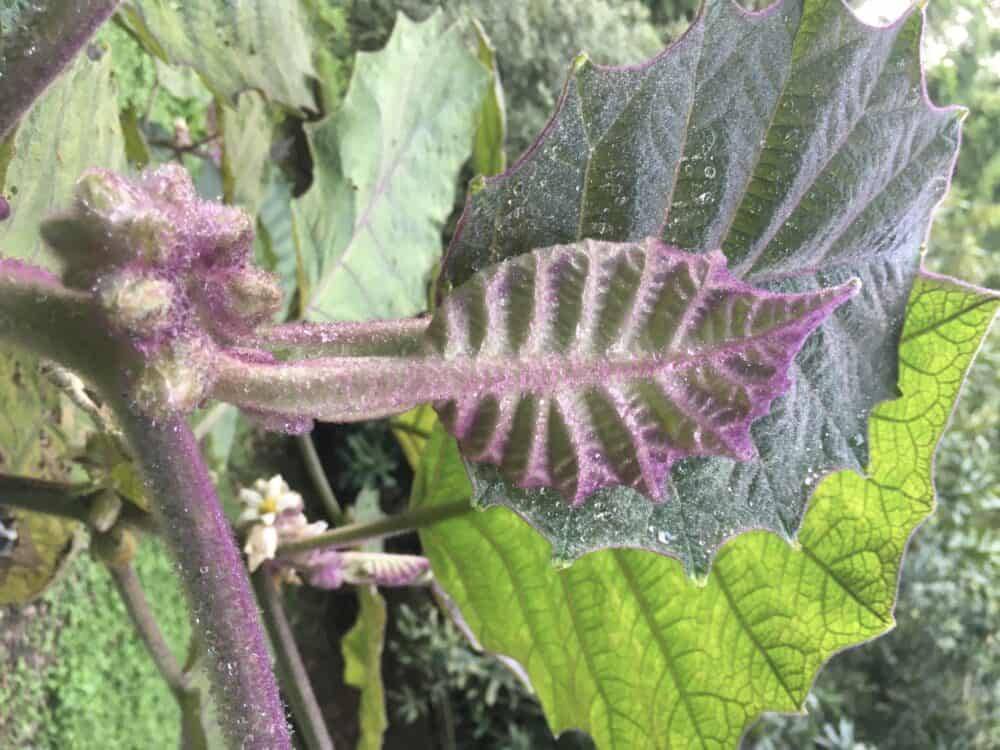
The surrounding region is a cloud forest ecosystem, known for its extraordinary biodiversity.
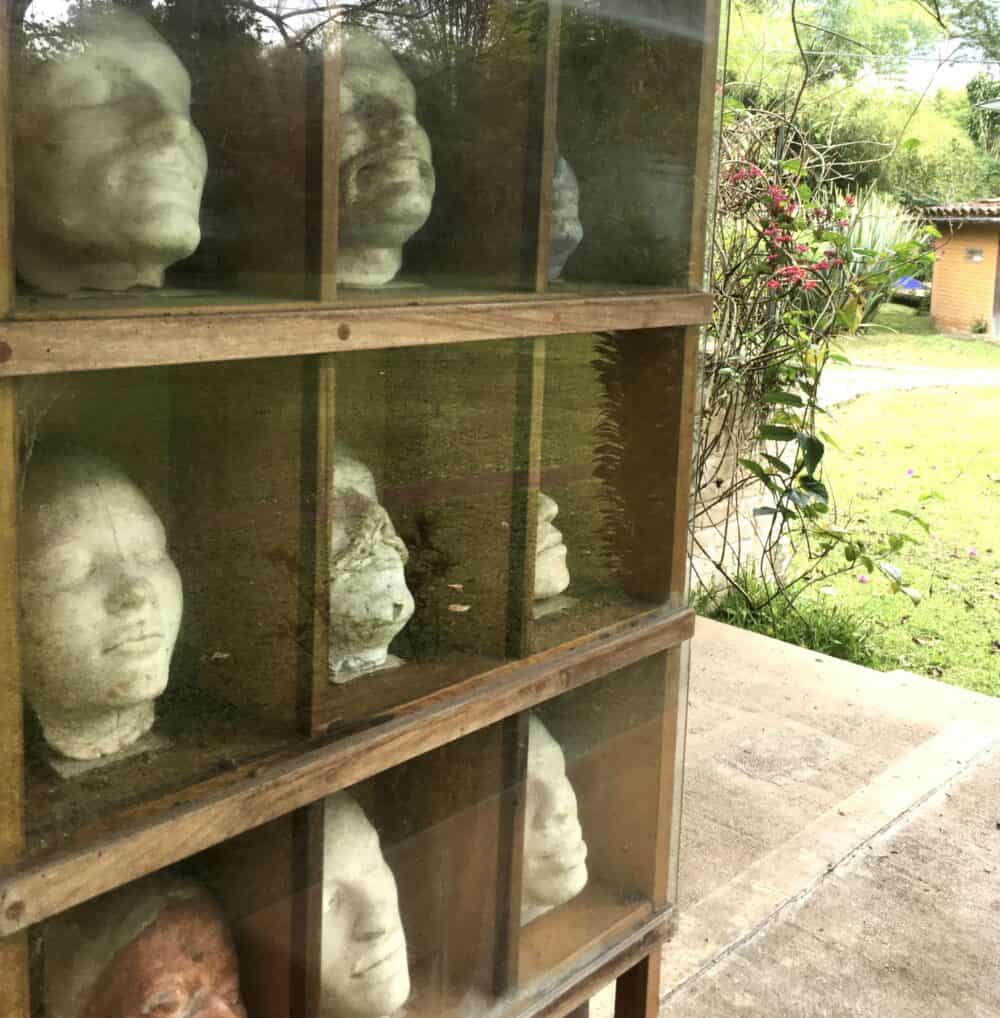
At the ranch, I met architects interested in sustainable materials, anthropologists, biologists, and artists working in printmaking, ceramics, textiles, performance, sound, and film.
Rancho 2y2 was started by dancer and choreographer Rocío Sagaón and artist and designer Georges Vinaver.
After years immersed in the vibrant artistic and intellectual culture of mid-century Mexico City, they made their home in Veracruz, establishing a working farm and a place for artists in the community to gather, stay, and engage in creative collaboration.
Vinaver’s architectural philosophy shaped the landscape and its dozens of structures.
The buildings combine modernist ideas with an intimate attention to daily life. Little houses have oval doorways, prompting a shift in posture as one passes through them. Cement forms soften into organic curves, an aquarium is used as a window, and skylights and portals frame unexpected views. Stones become chairs, and drawers open through walls so that firewood can be loaded from outside and accessed from within.
Shelves and niches carved into walls appear in curious places, inviting attention to the ordinary objects they hold. Even practical elements—a loop of scrap metal used to hold a bar of soap, or a path made from tractor tire treads to keep feet above the mud—feel quietly poetic.
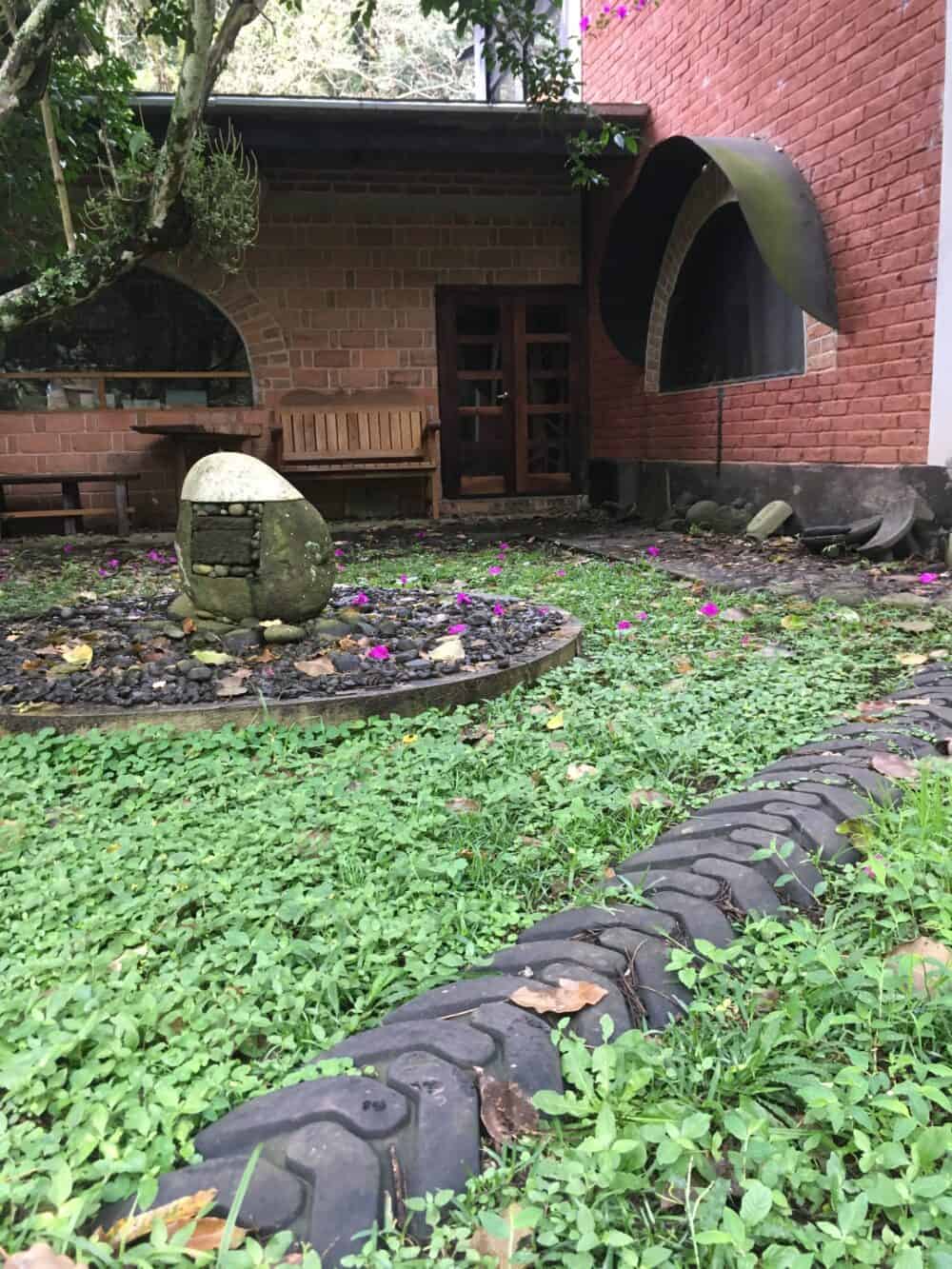
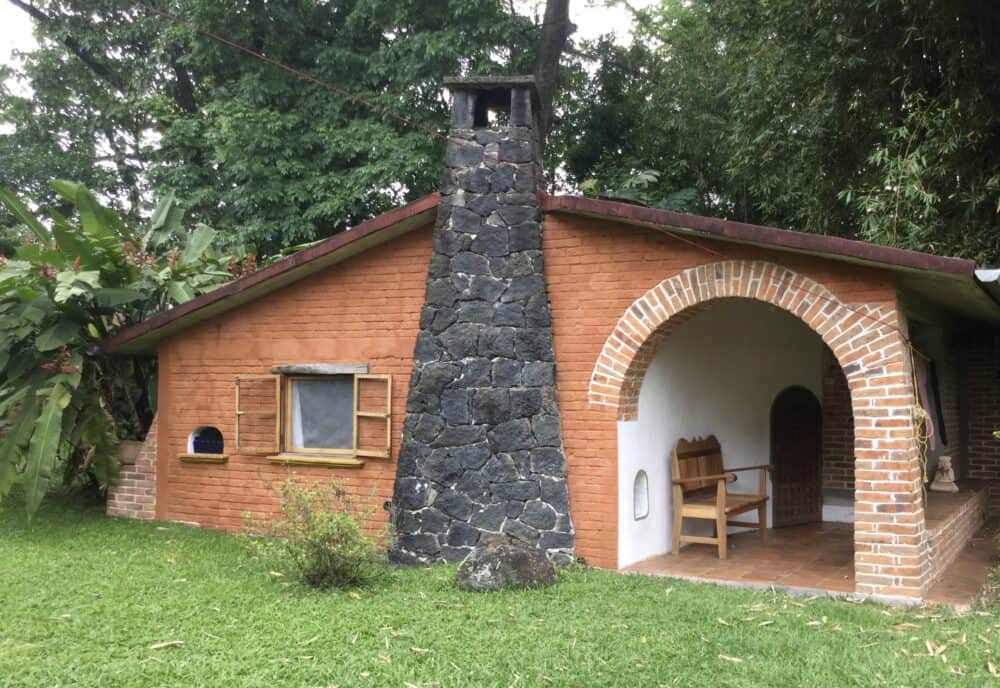
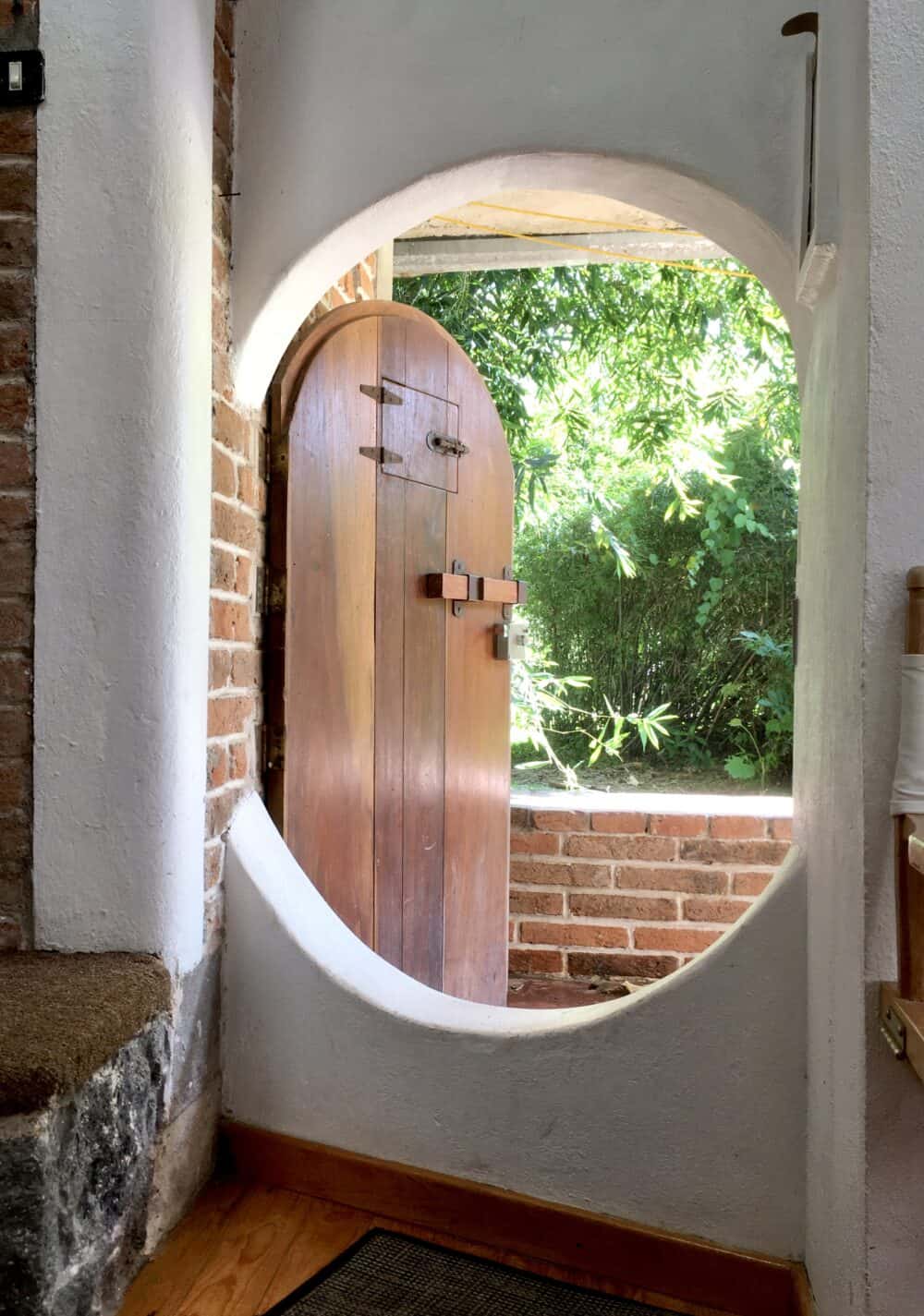
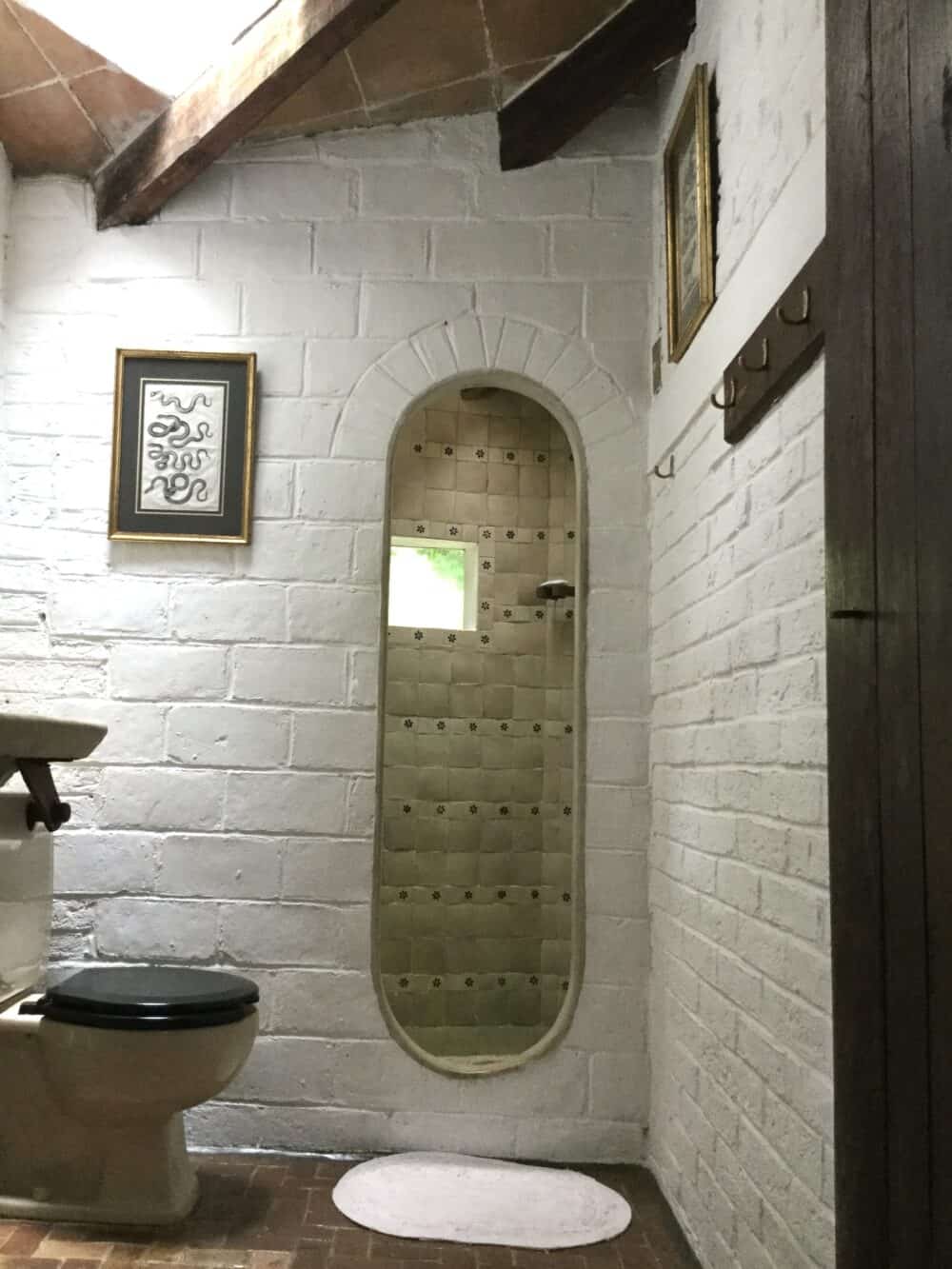
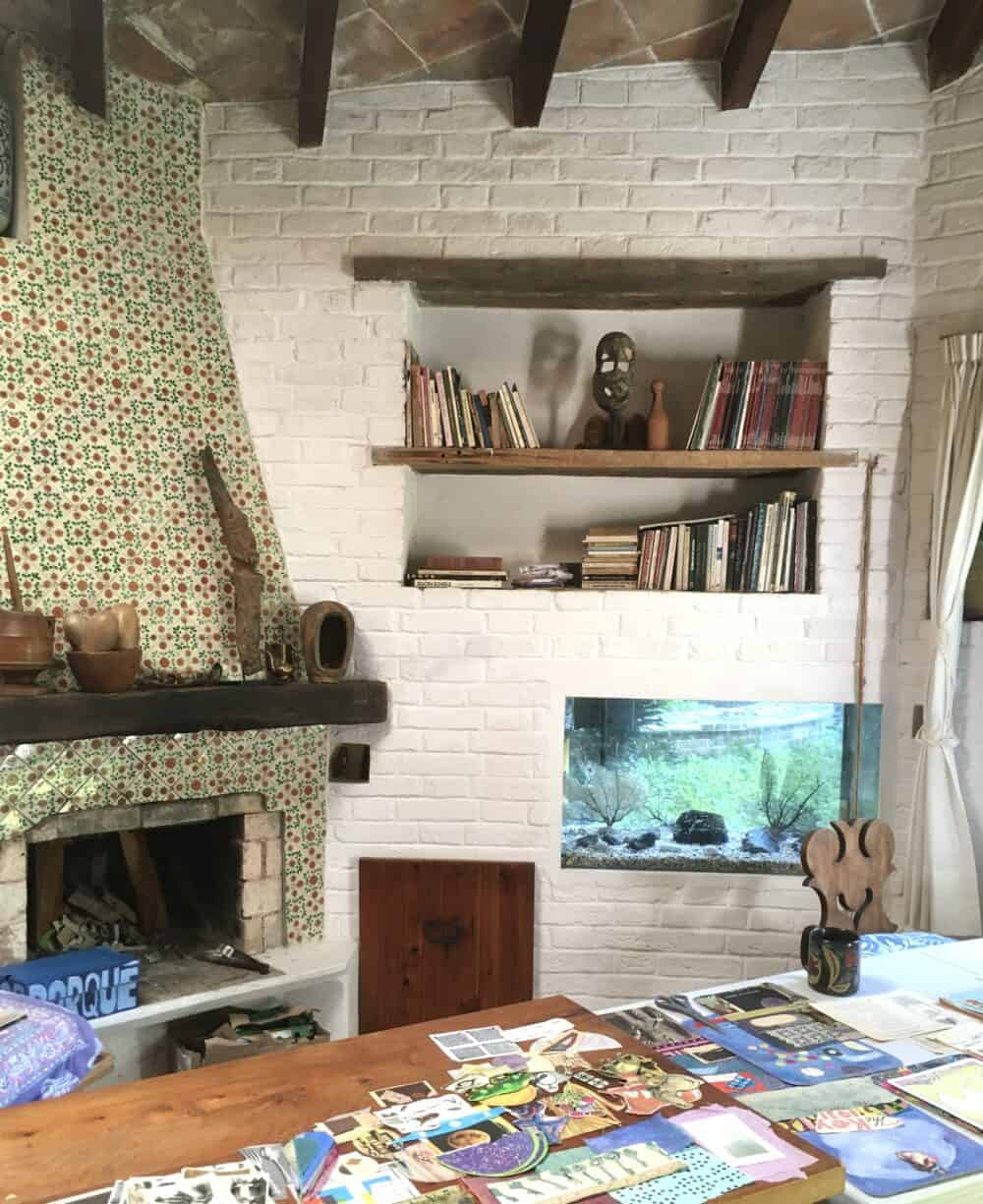
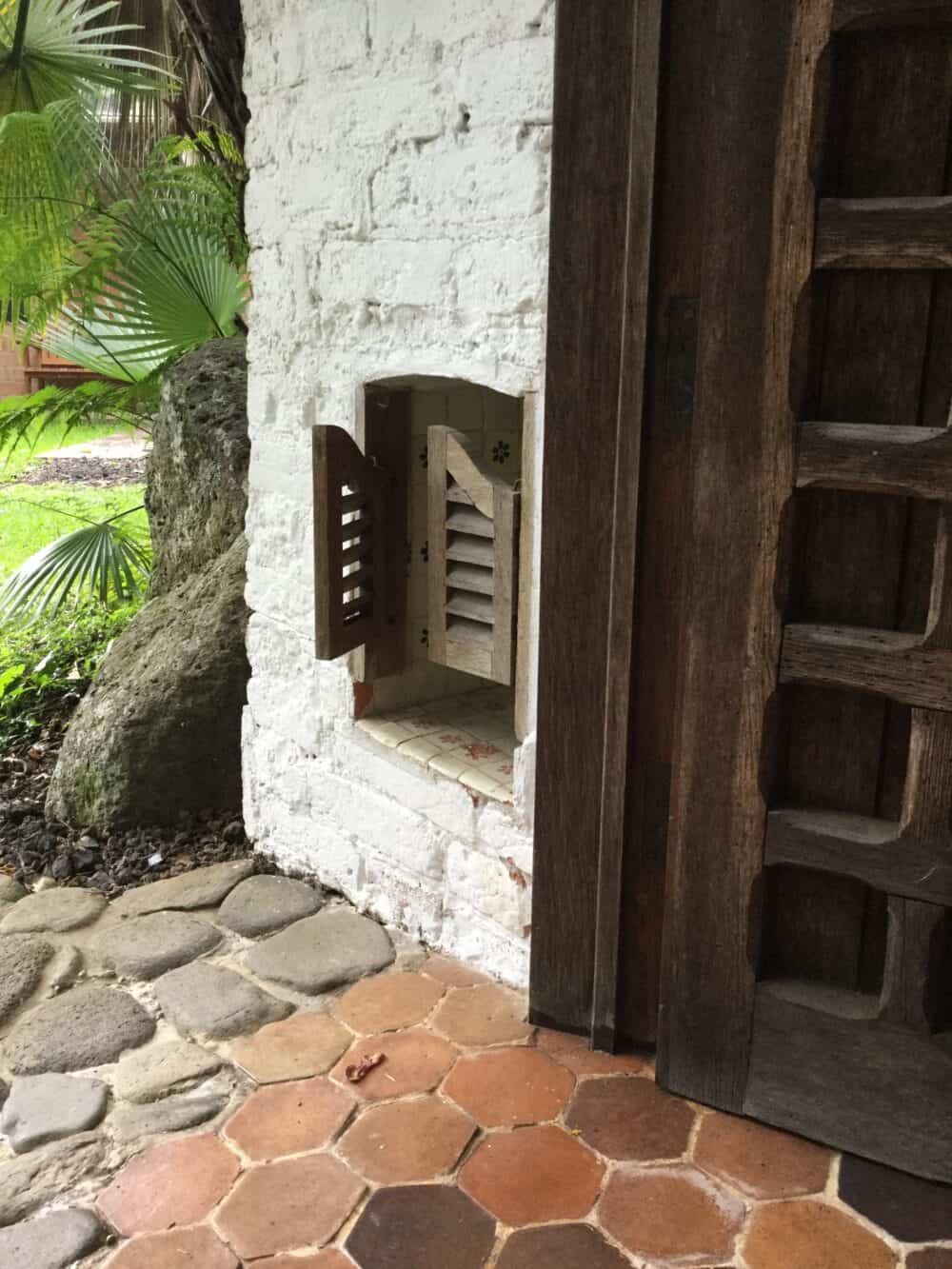
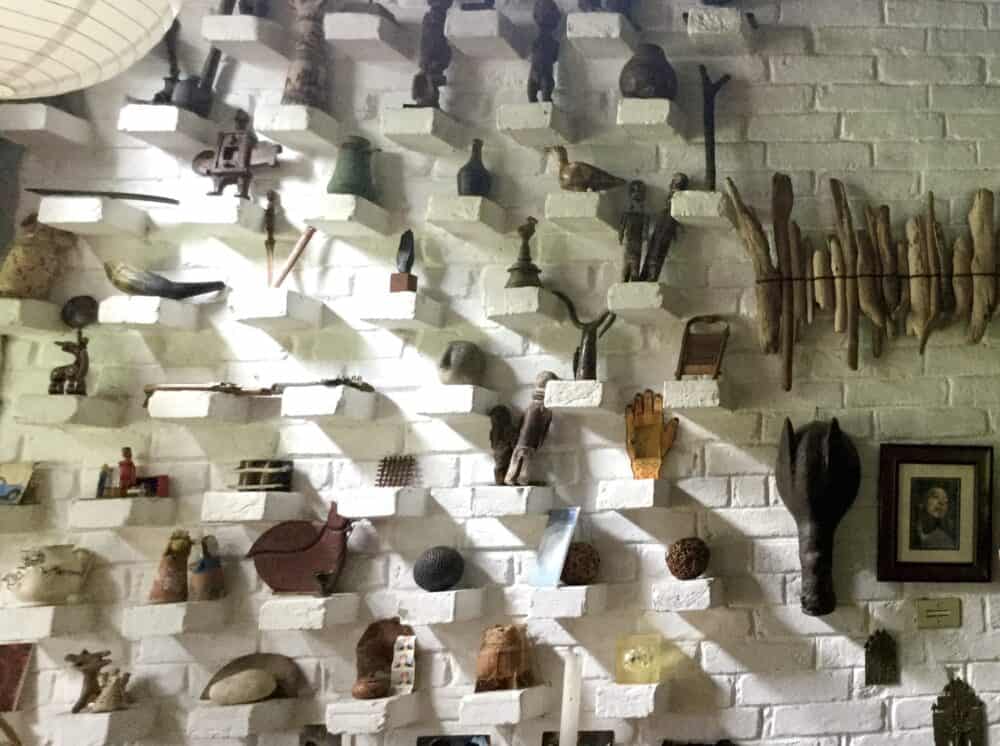
I never met Georges Vinaver, but had the pleasure of spending my month at the ranch with his family. I knew he had studied architecture in Chicago, where I grew up, and living in the environment he had designed created an unexpected sense of recognition. I began to understand, at a visceral level, some of the ideas and structures I had grown up with, and how they had become early inspirations for my own artistic practice.
The environment became a stage for what I think of as The Performance of Everyday Life, heightening an awareness of scale, function, and perception. Each interaction with the whimsical utility of the place felt like a living metaphor, a game of discovery.
At Rancho 2 y 2, I played with a variety of materials and media: collage, photography, and small sculptural arrangements. Three projects became central to how I understood the space and my place within it.
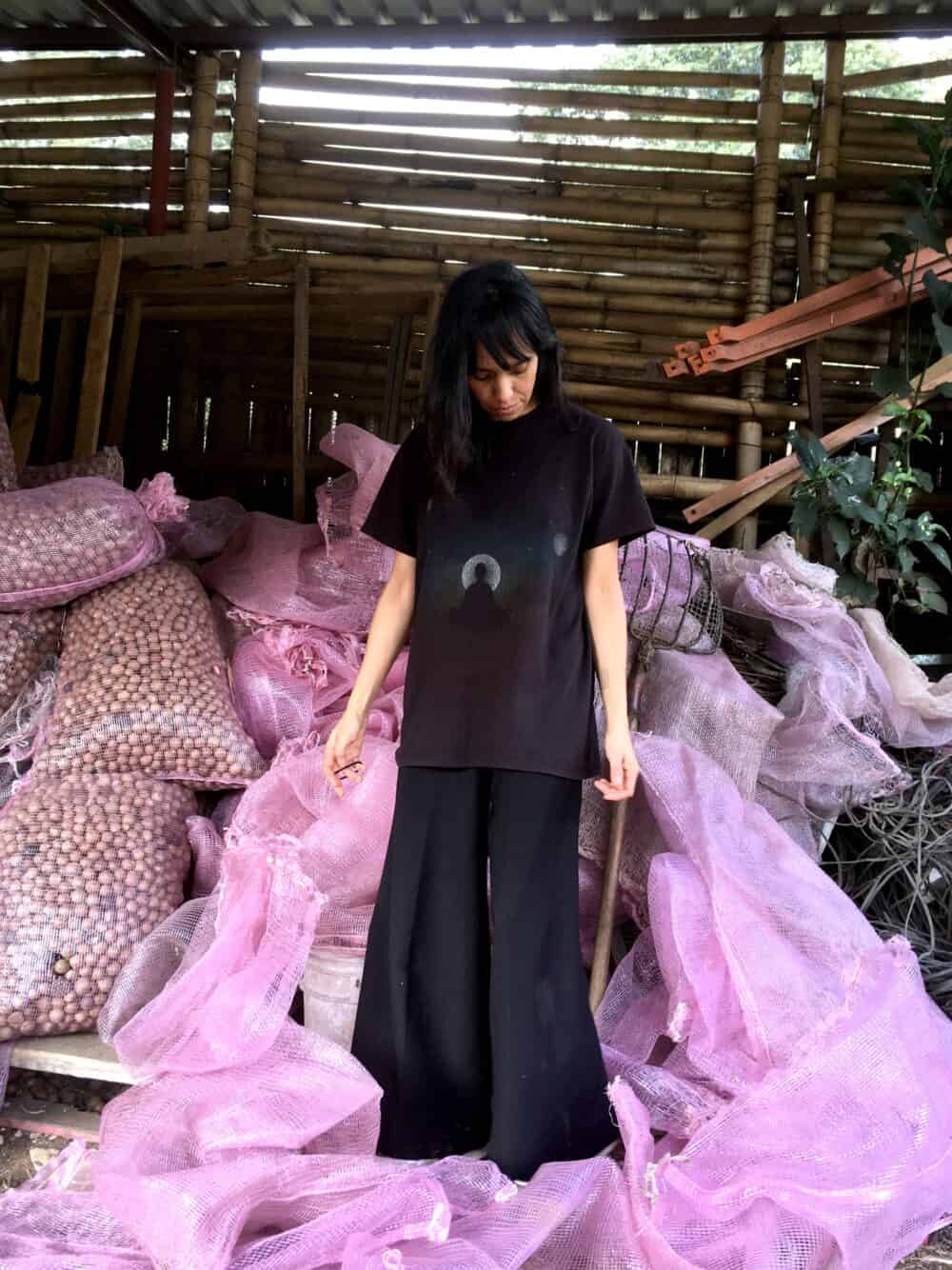
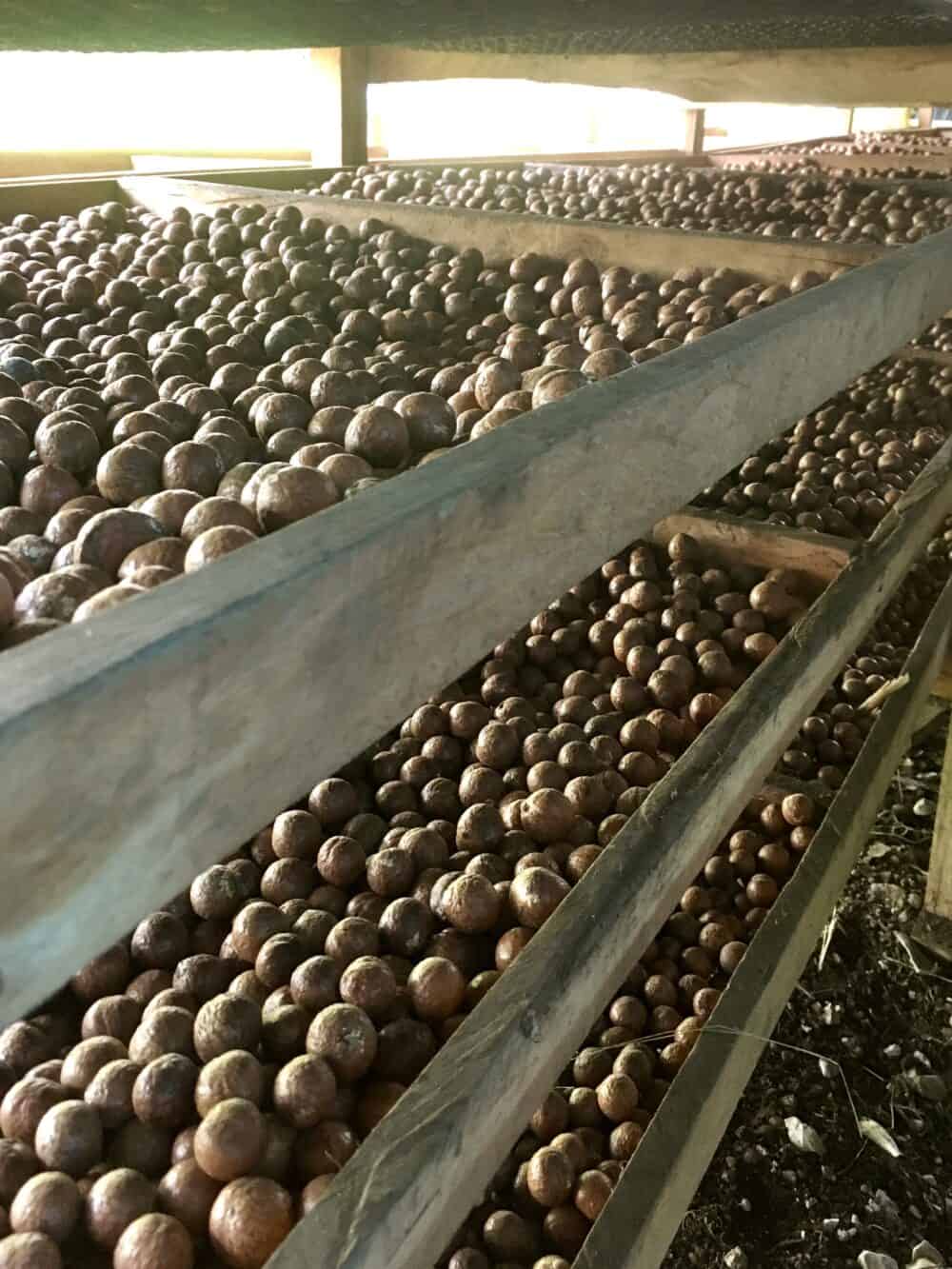
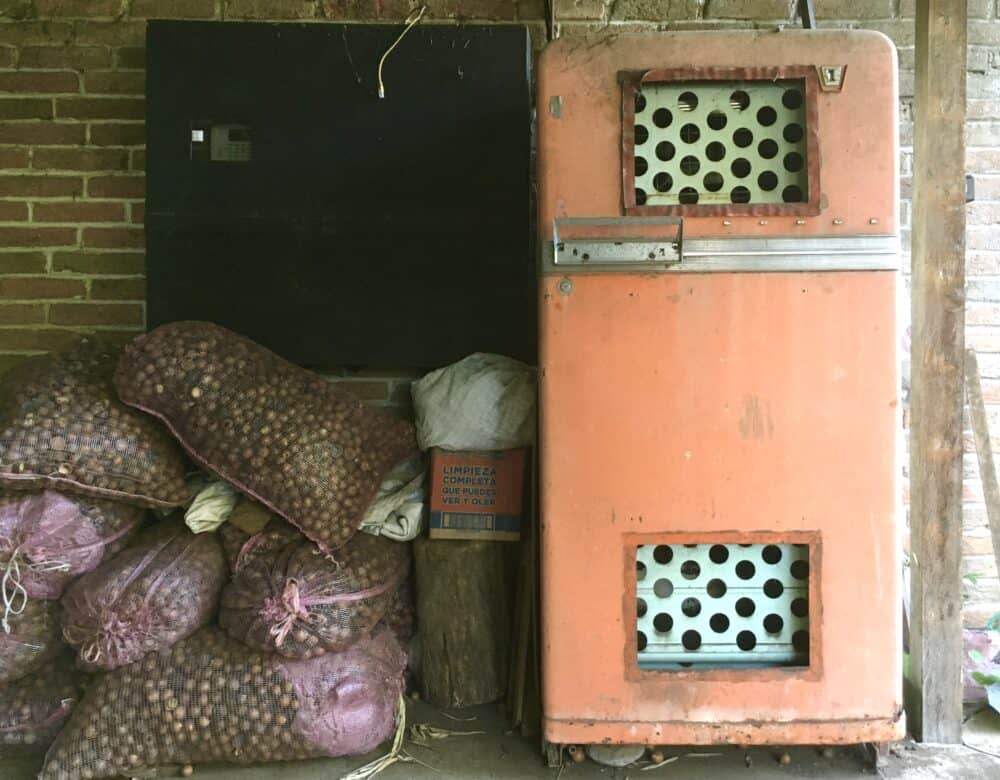
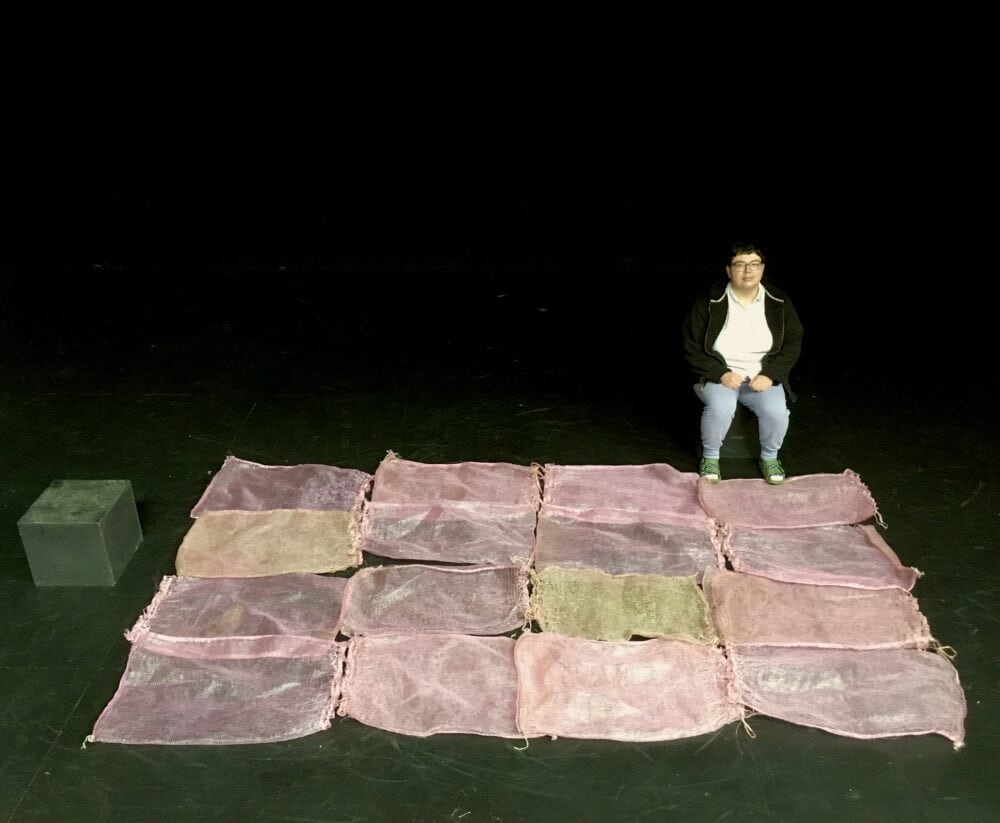
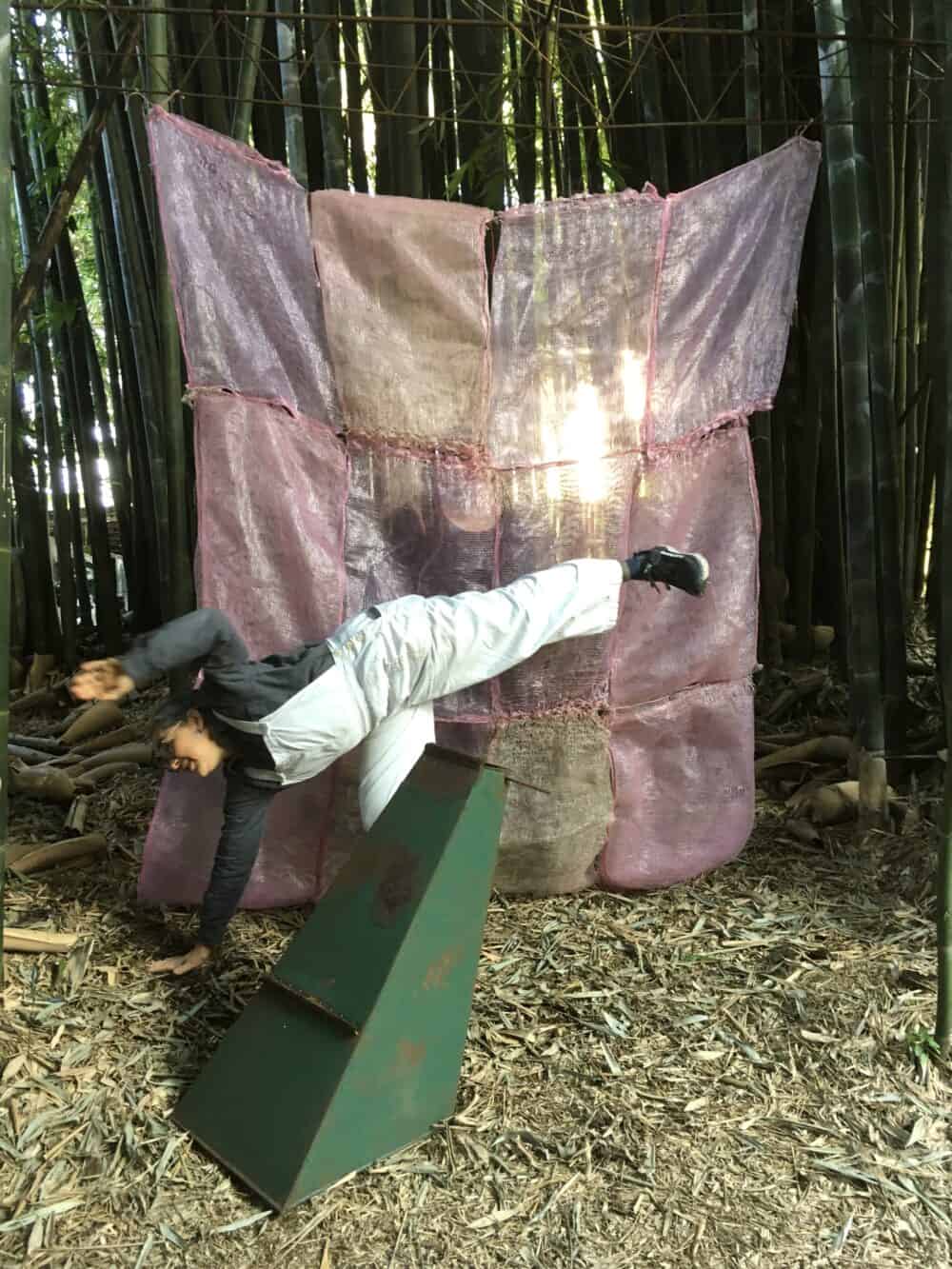
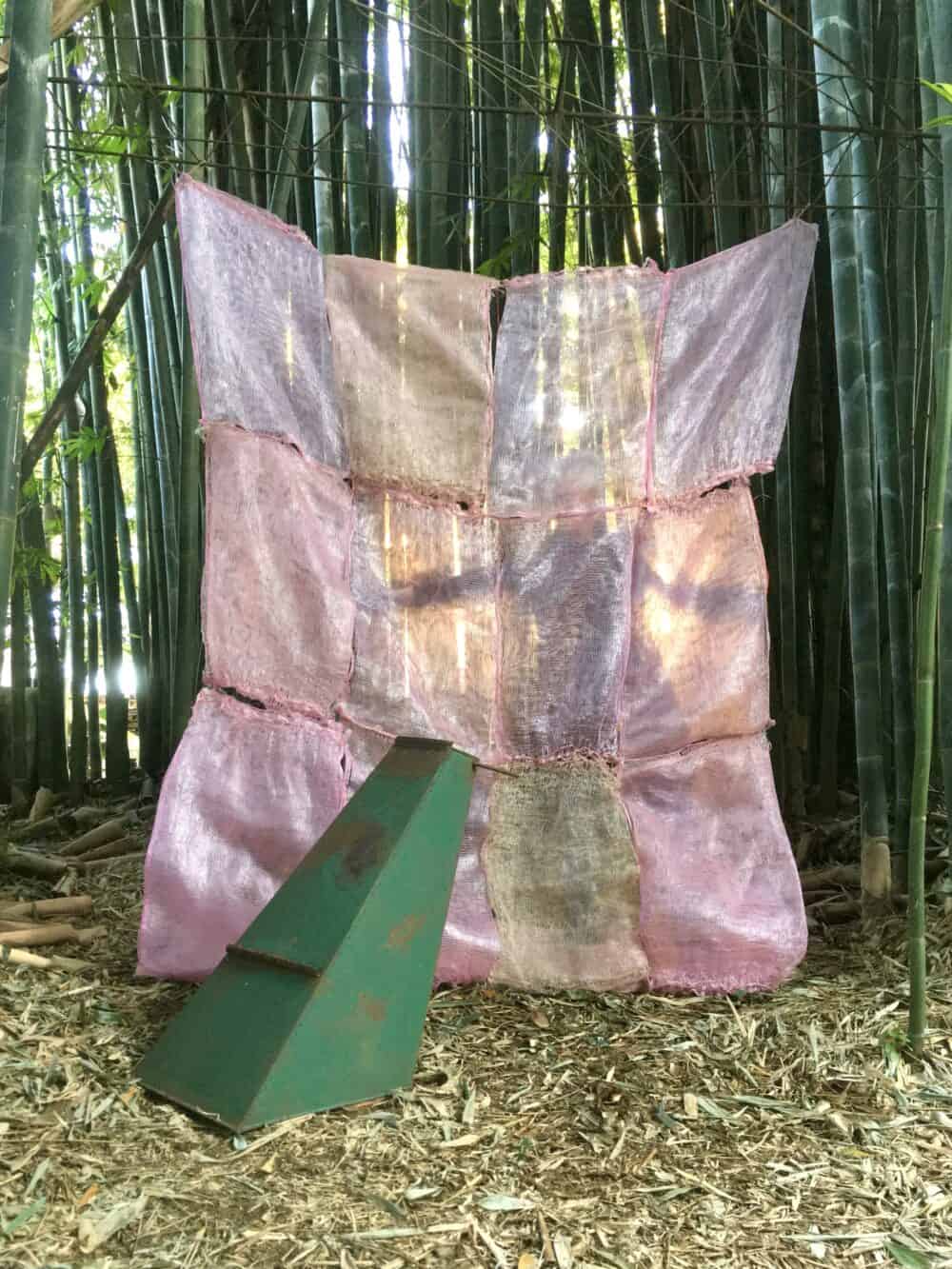
The grounds were scattered with piles of translucent pink woven-net bags used to contain and carry the macadamia nuts during processing. They had aged into a range of tones, gathered in soft, billowing accumulations, some torn and in need of repair.
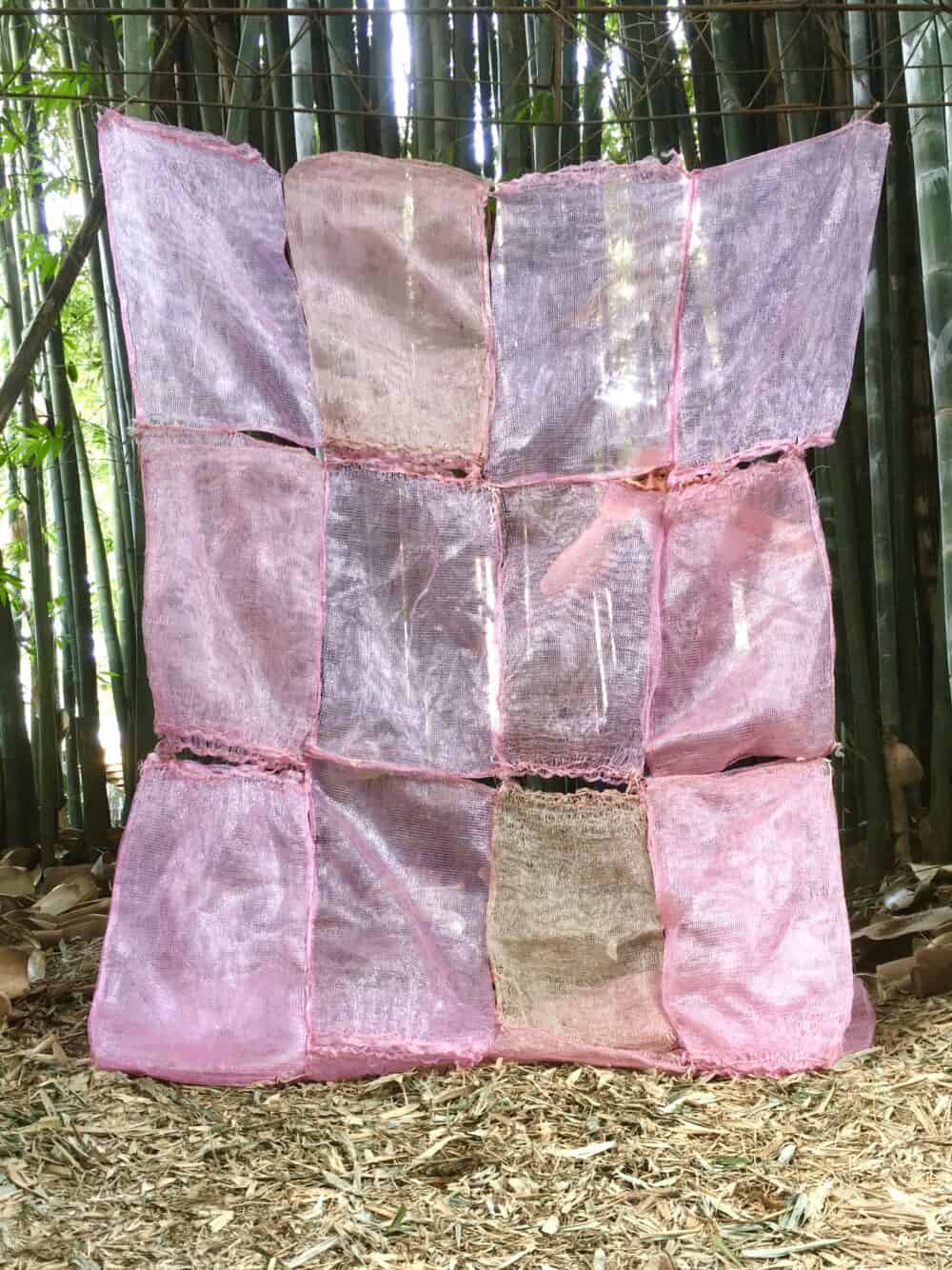
I roughly sewed a few dozen together by hand to create a quilt of sorts, a soft, permeable pink wall, and hung it from a metal rod in a bamboo grove.
People could be photographed in front of or behind the curtain, their figures shifting between visibility and opacity. Light passed through it differently throughout the day, alternately revealing and obscuring the bodies behind it. It became an interactive site, a makeshift stage, a semi-permanent relic of impermanence.
What began as an engagement with physical scraps became an exploration of how we see one another, and how fragments of memory, belief, and inherited experience shape the stories we tell.
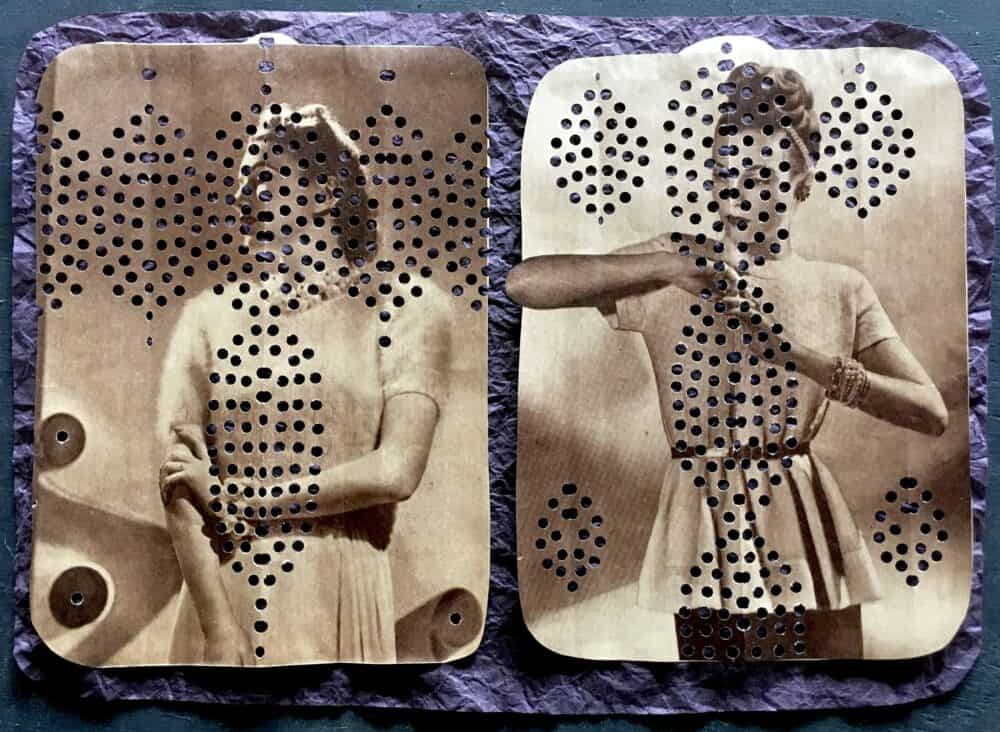
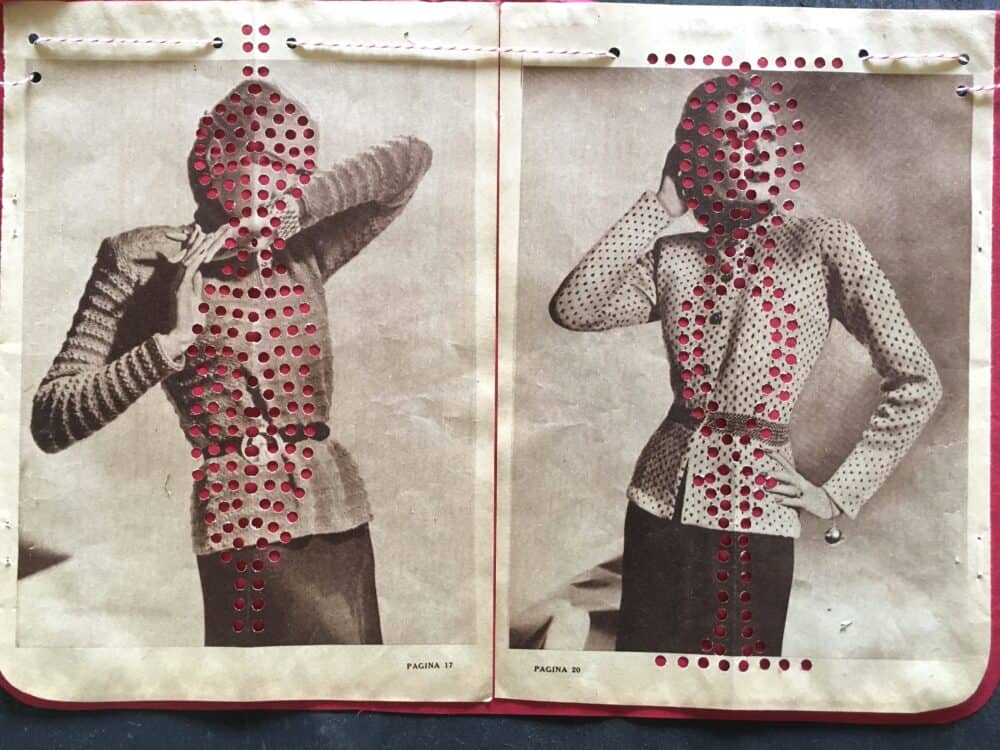
A second body of work began with materials I had brought with me: a suitcase filled with printed ephemera gathered at Mercado de los Sapos (The Toad Market), a flea market in Puebla.
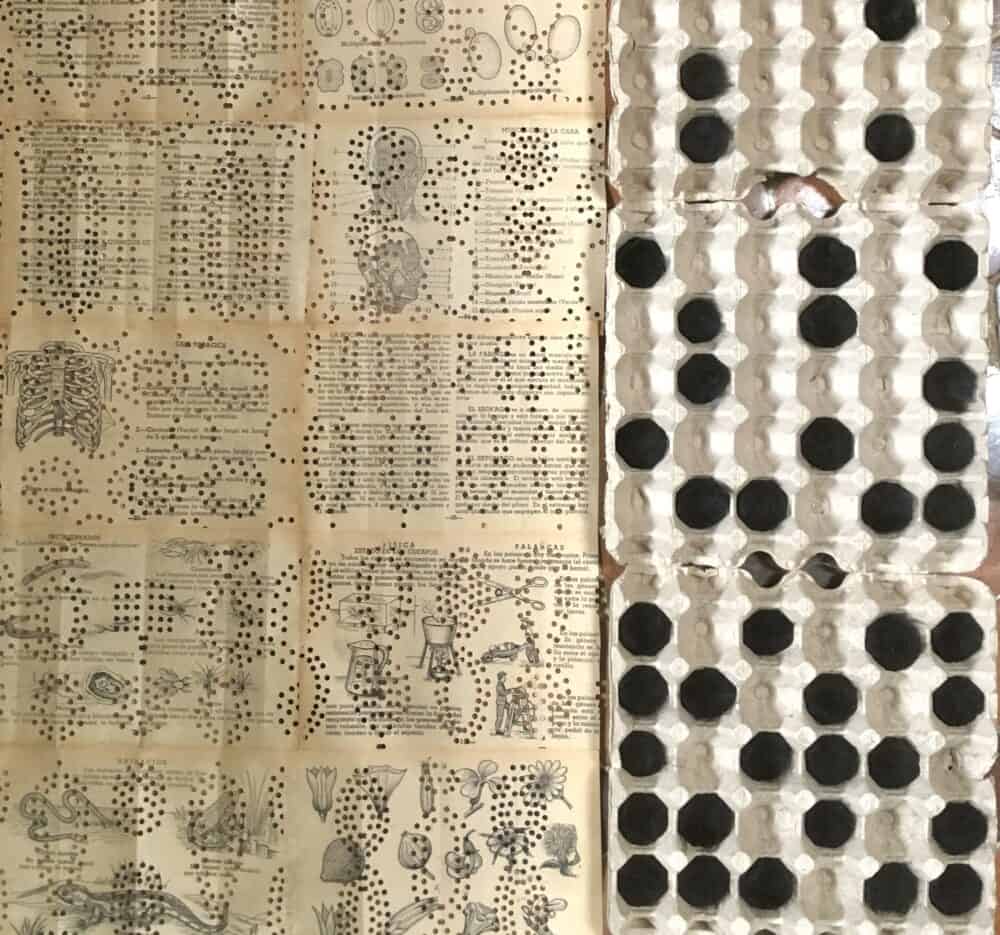
There were pages from a fifth-grade natural sciences book, mid-century women’s magazines advertising bags and soap, aspirin and shoe stores, fashionable hats and gloves, and advice on how to get a man to notice you, what to do and what not to do on your wedding day, and how to behave in the home and in society.
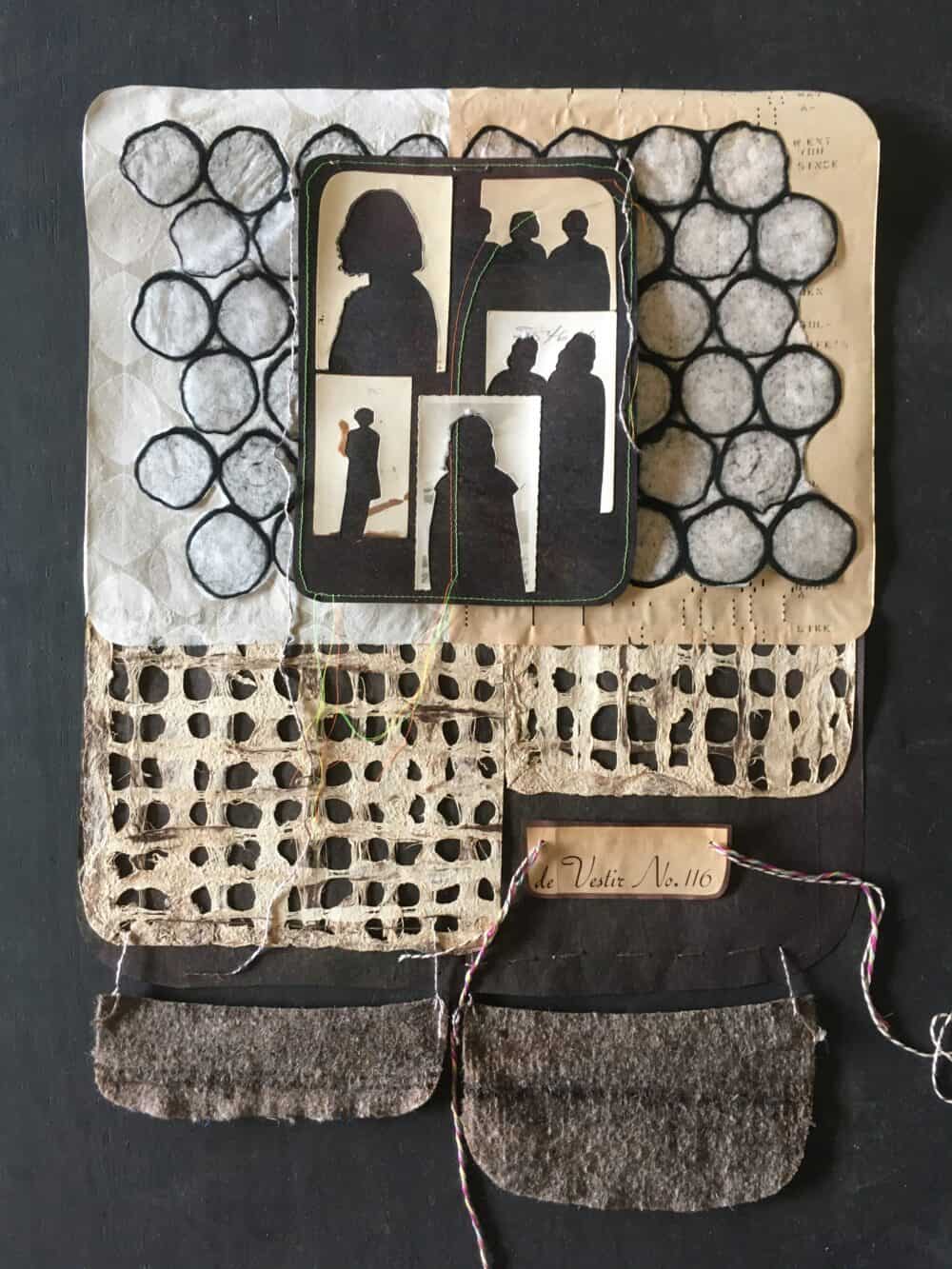
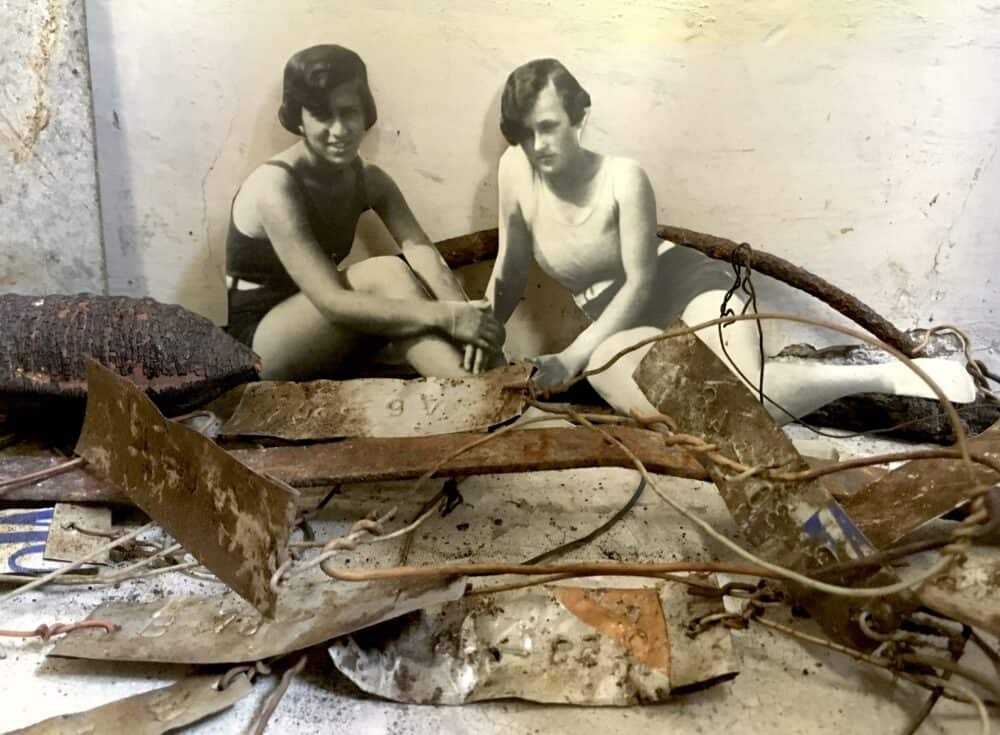
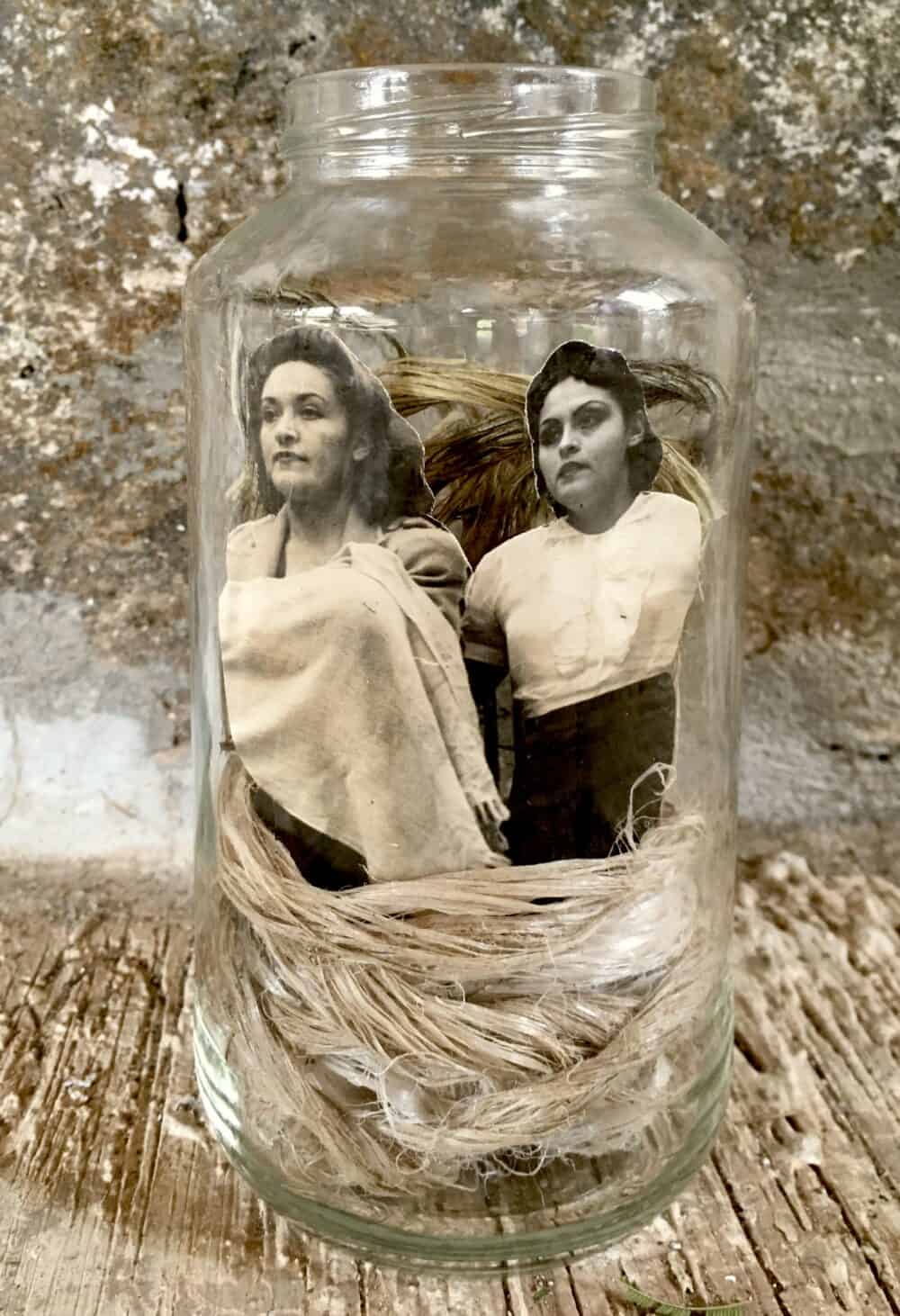
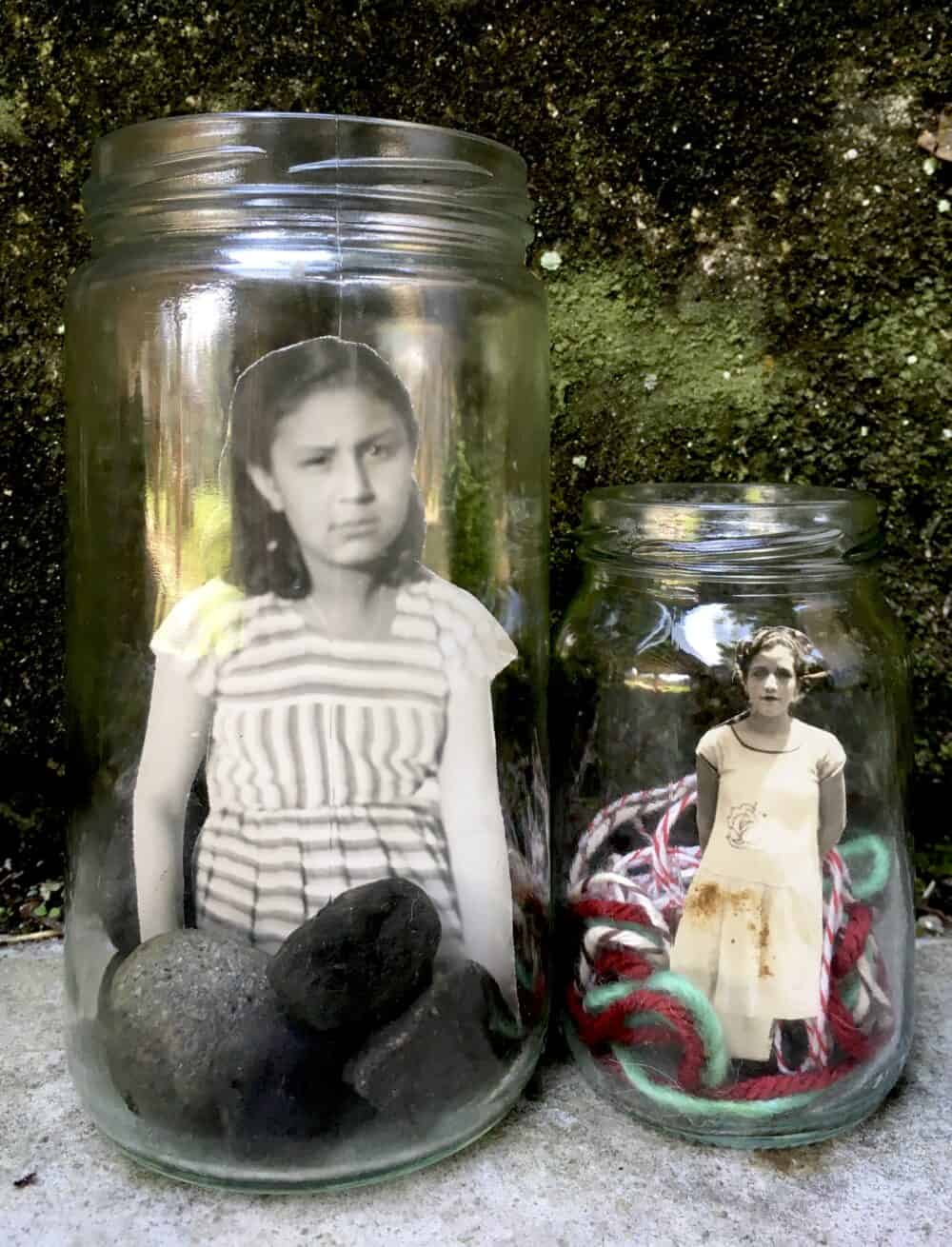
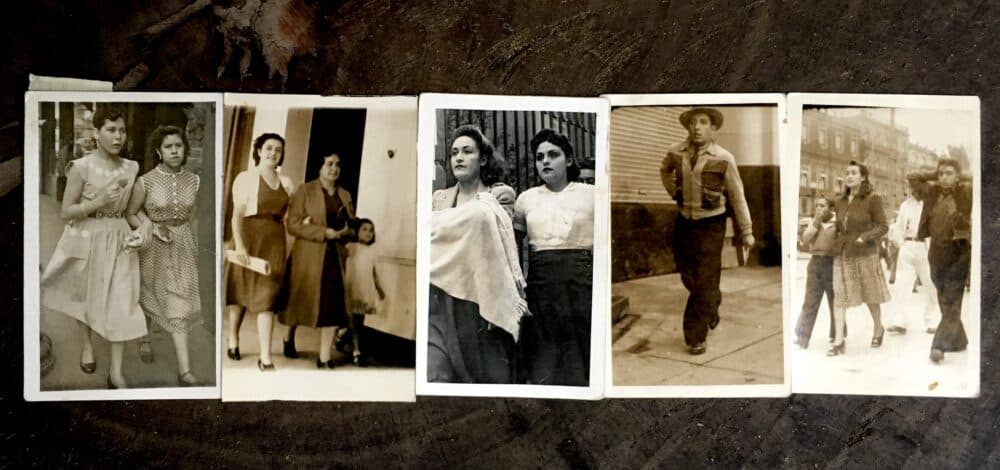
I also had handfuls of black-and-white photographs, stained and faded to sepia. They captured ordinary moments of life on stone steps and at dances, getting in and out of cars, holding babies, and putting laundry out to dry. In the images were expressions of hope, loss, and regard.
I cut the figures out from their backgrounds and placed them in jars with pebbles, grasses, grains, and fibers gathered at the ranch.
In one, two women clutch each other’s arms as they run down a street. Contained within the jar, their movement was preserved and suspended, capturing their ambition to move forward. Was the urgency to run away from something or move toward it?
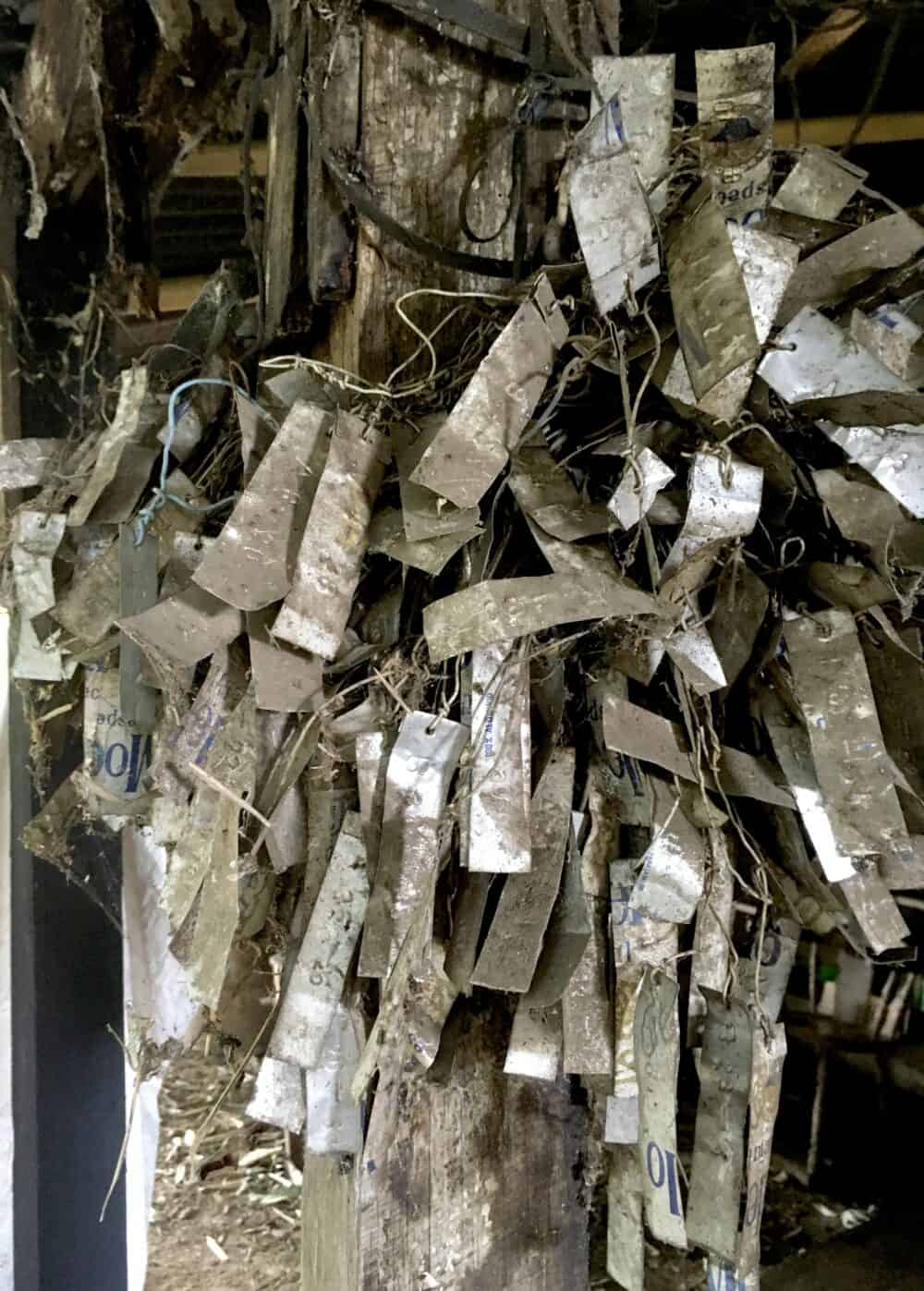
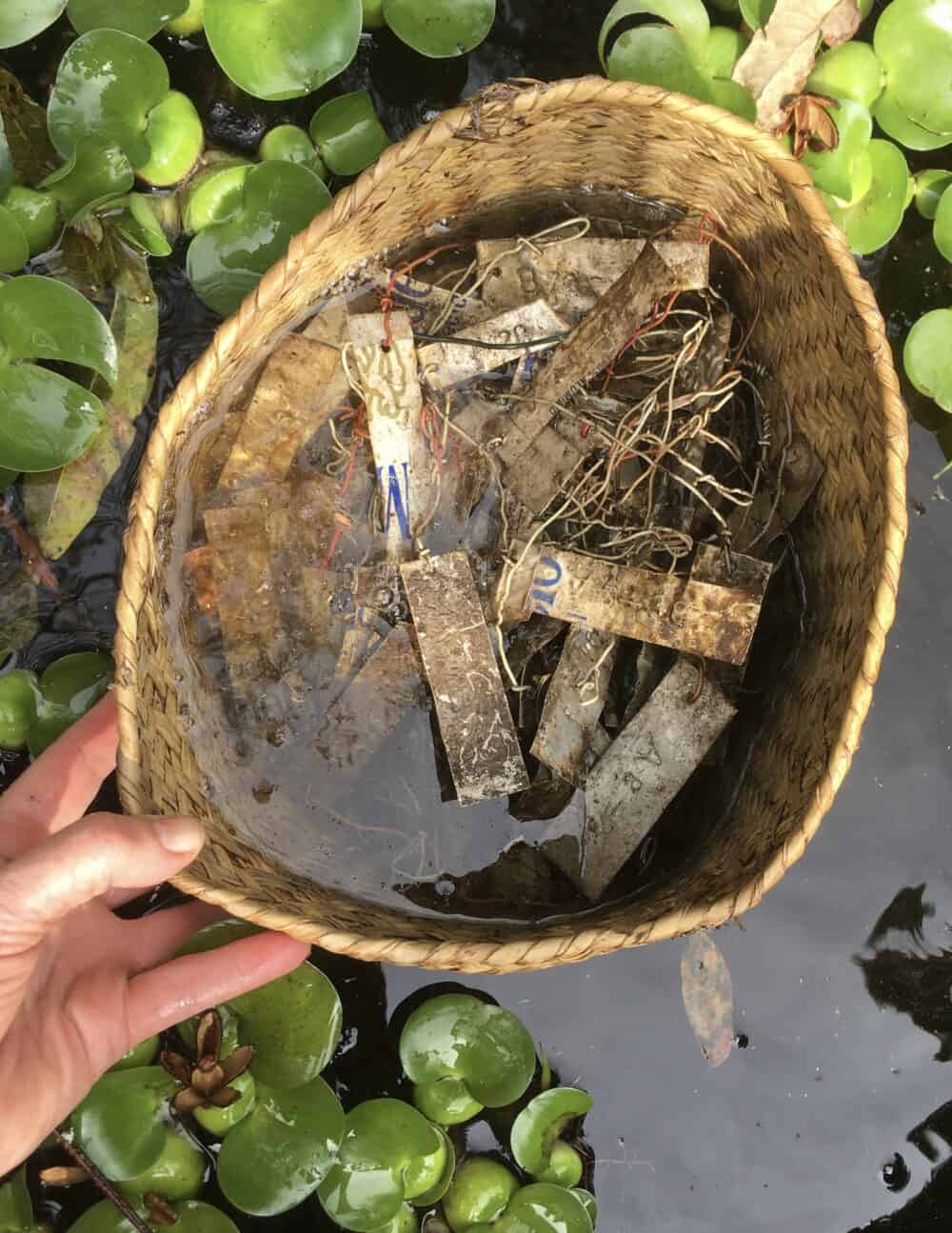
A third project was inspired by a discovery on the grounds of the ranch. I found dozens of avocado plant tags made from tin soda cans and loops of wire, hanging in clusters on nails and hooks in a shed-like space. Each had been crafted by hand to mark a single plant. The repeated forms were simple and inventive: rectangles of tin, loops of wire, sometimes still bearing fragments of their original soda labels. Crude and resourceful, yet surprisingly delicate, they felt like small readymade sculptures. They were remnants of an earlier agricultural life, before an avocado crop was lost and macadamia farming began.
There was an archaeology to discovering, salvaging, cleaning, rinsing, drying, ordering, and noticing each piece. These were objects no longer serving their original function, but still carrying the history of ingenuity, precision, labor, and loss.
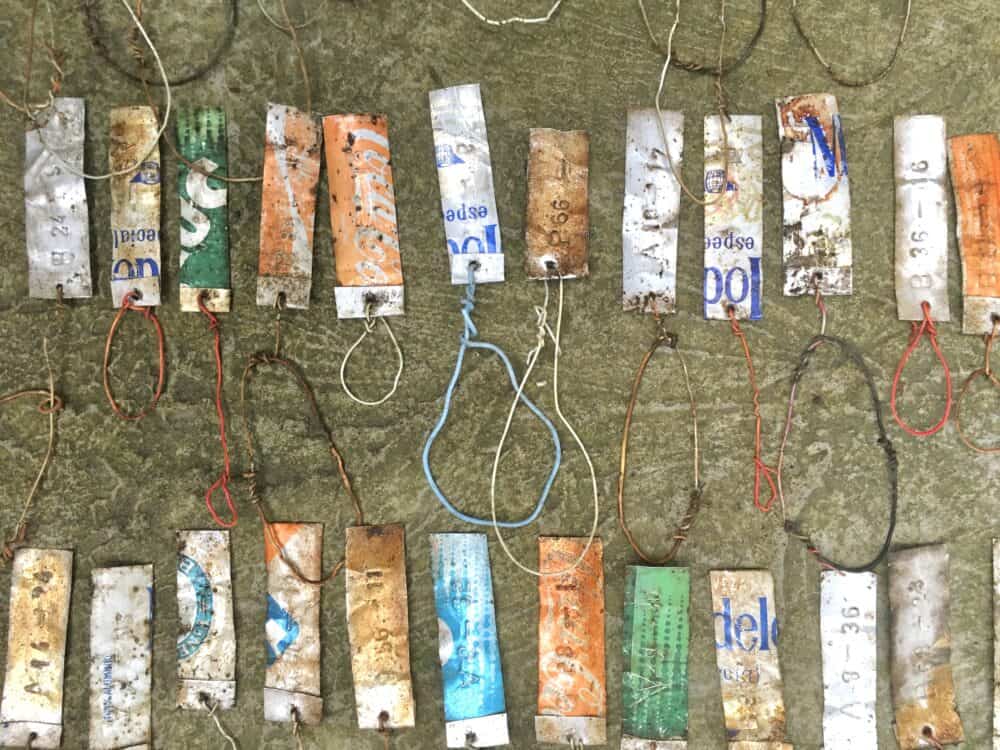
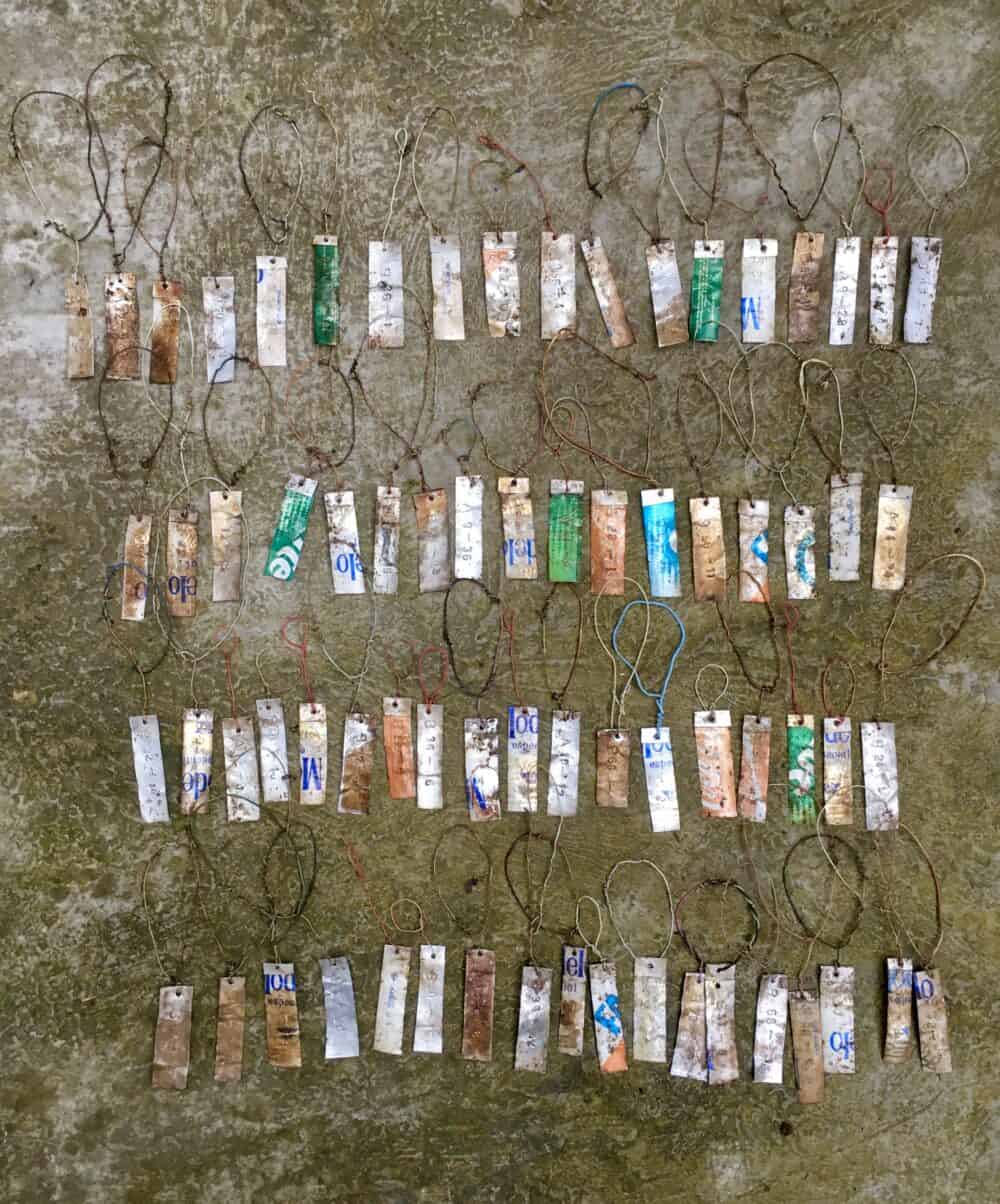
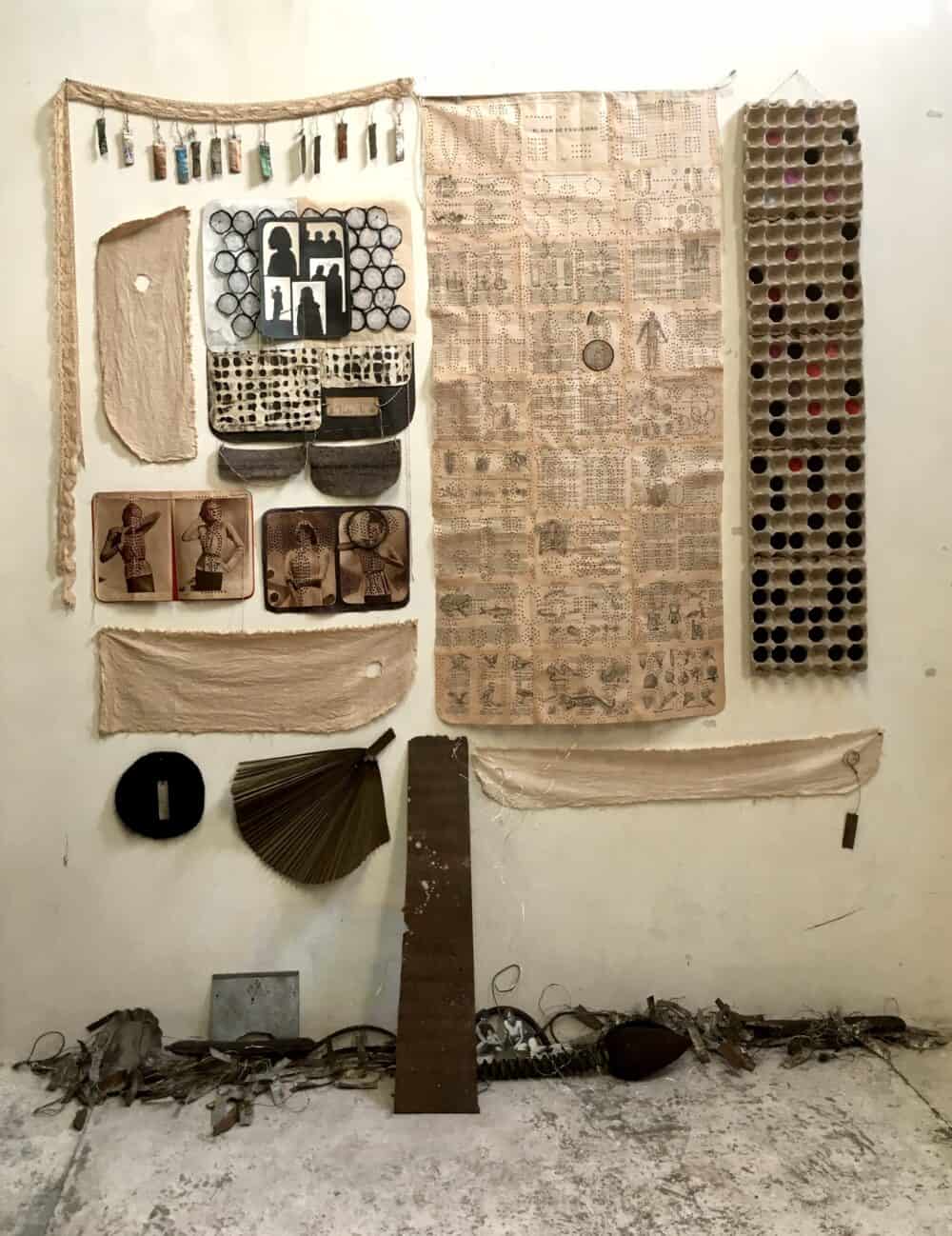
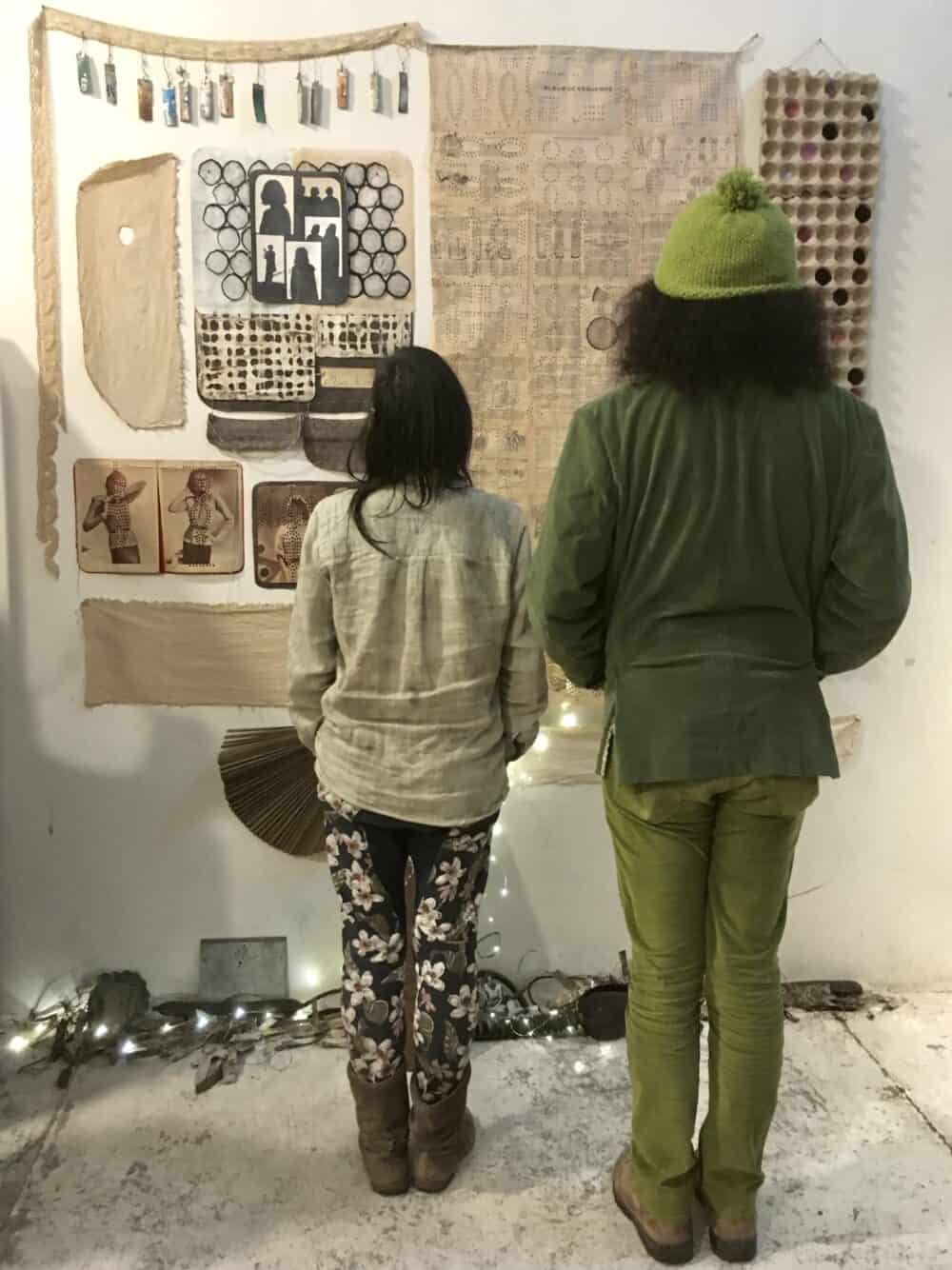
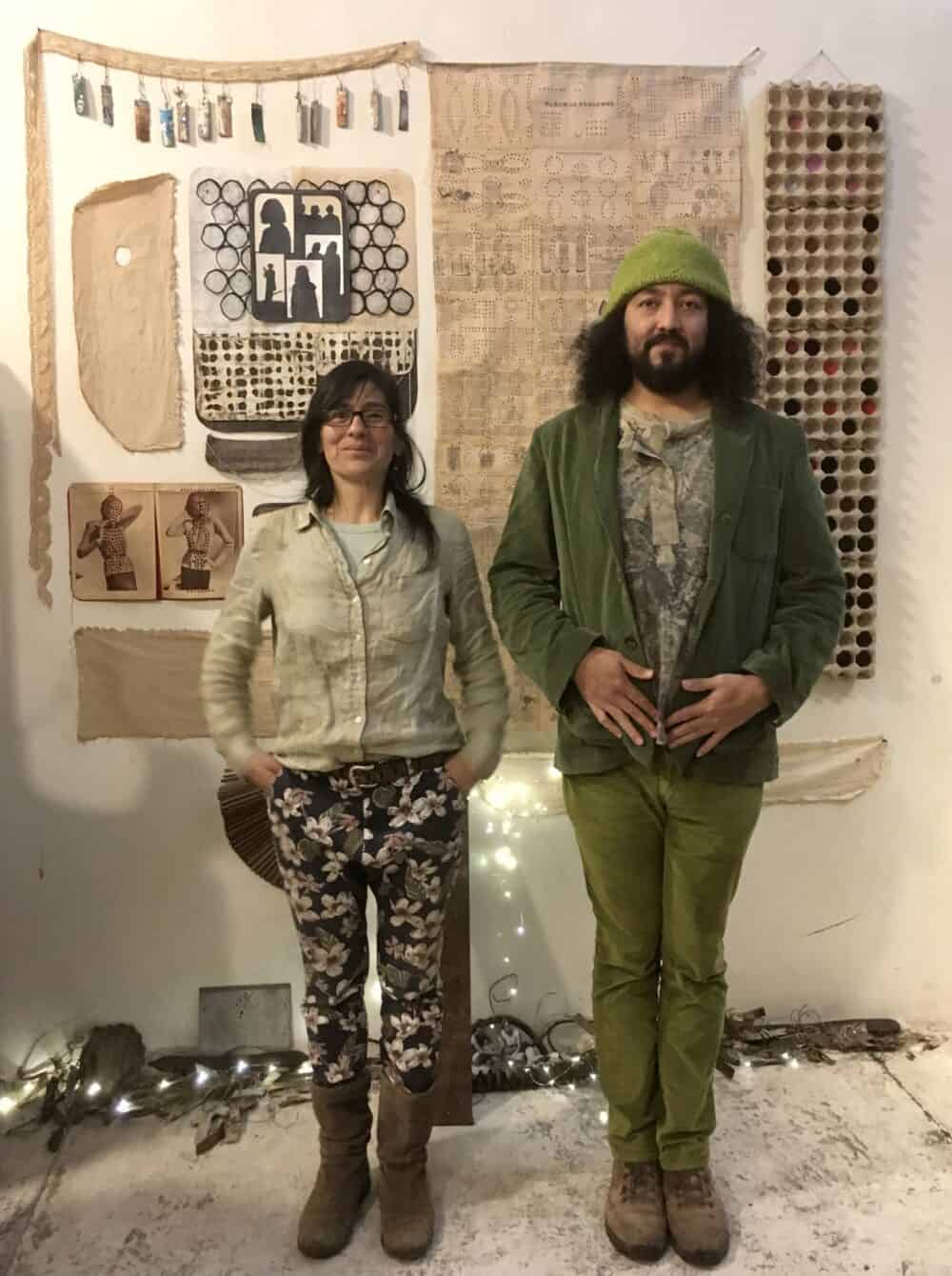
I strung some of them in ornamental lines, like textile art or adornment, on an old piece of lace, and used them as linear elements in a site-specific installation.
The installation itself brought together materials from my studio and objects gathered around the grounds. It was an assembly of images, textures, and forms in conversation with one another.
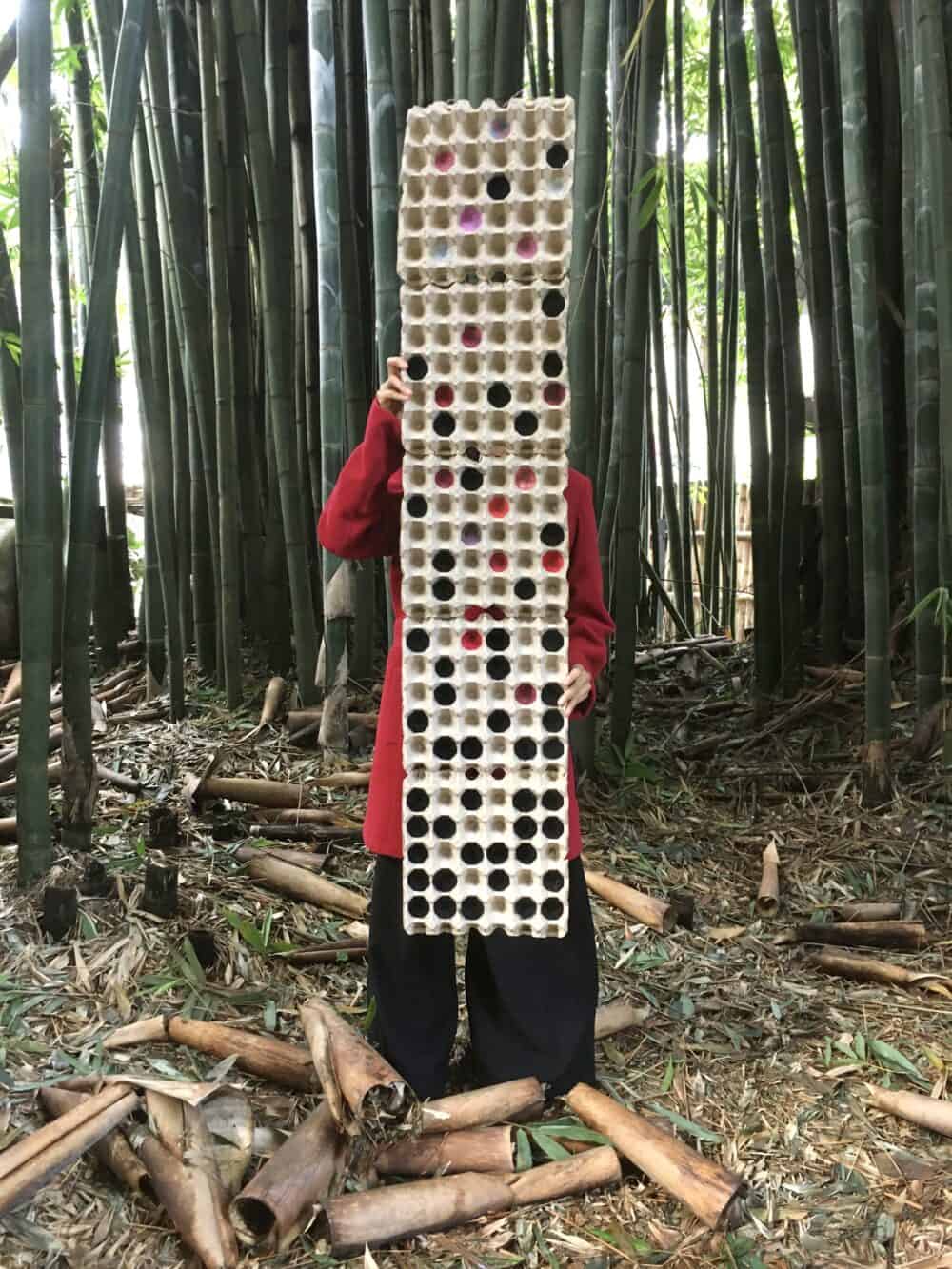
I brought in rusted sheet-metal shapes, pods, dried palm fronds, discarded bakery tins with fluted edges, wire, scraps of black wool from Chiapas cut into small discs and fitted into the indentations of egg cartons, hole-punched book pages, paper made from rice and tree-bark fibers, aged cloth cut into ellipses and capsule shapes, and found photographs: the cut-out figures and the silhouette shapes left behind.
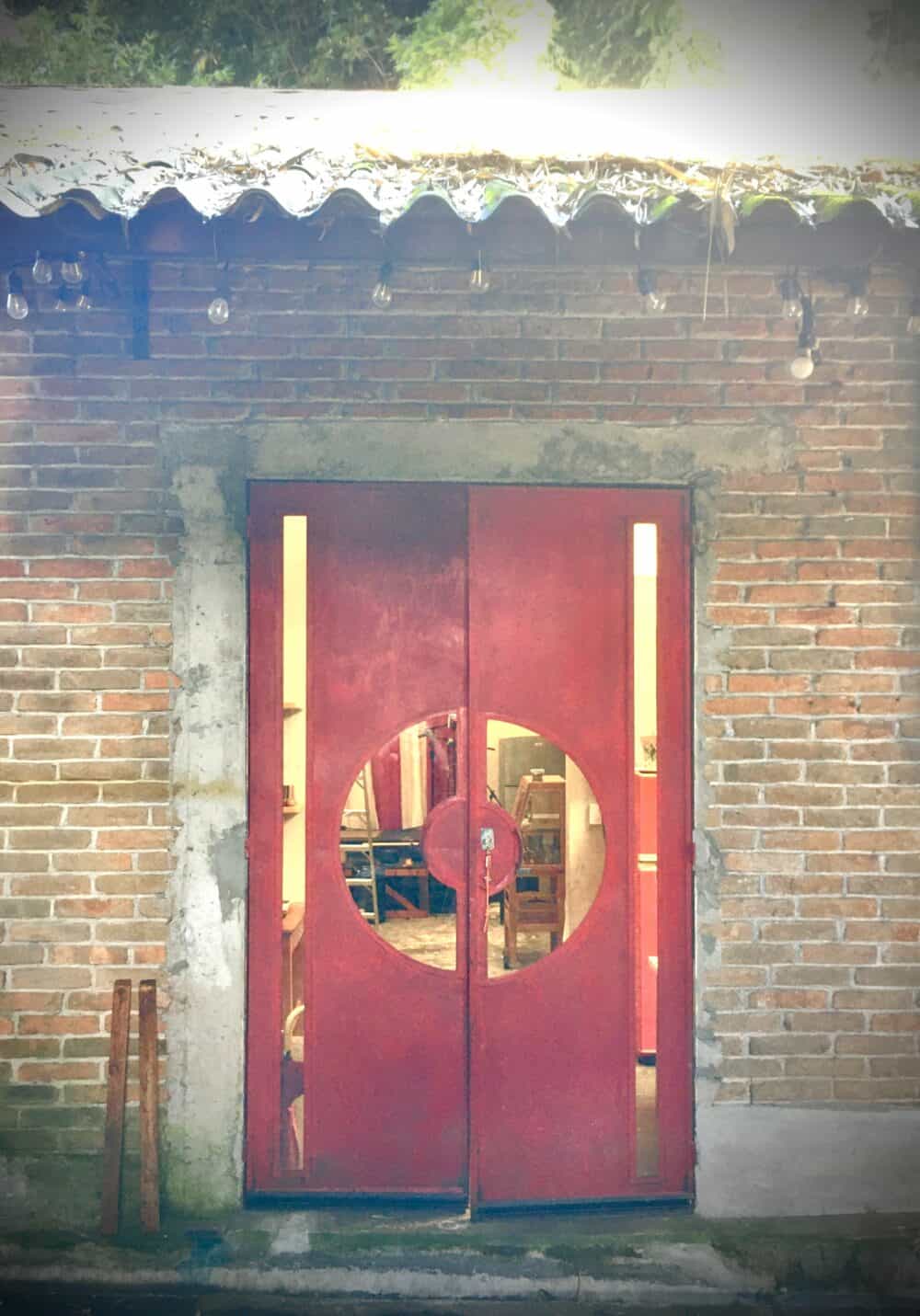
The installation was part of an exhibition with half a dozen other artists working in textiles, performance, printmaking, ceramics, photography, electronic music, and video. We shared our work with the community, and with each other in a gallery space at the ranch, “La Nave”, a renovated warehouse with whitewashed cement walls, twenty-foot ceilings, round windows, and an Art Deco red metal door.